
The factions of S.T.A.L.K.E.R. 2: Heart of Chornobyl give the Zone its politics. They are not just color-coded enemies; they are groups with competing visions of what the Zone is and who should control it, and the choices you make around them shape parts of the story. Understanding who stands for what helps you navigate those moments with your eyes open.
This overview was checked in October 2026 against the official S.T.A.L.K.E.R. wiki, Fextralife faction pages, IGN and GameRant story coverage, and community discussion on the subreddit. I have kept story specifics general to avoid spoilers while still explaining how the groups relate to one another.
How factions work in the Zone
Factions in S.T.A.L.K.E.R. 2 function partly as a reputation and story system and partly as flavor for the world. Some groups are broadly friendly, some hostile on sight, and some shift depending on your choices during key quests. Unlike a traditional membership system with ranks to grind, the game leans on narrative decisions and your standing with each group rather than a formal join-and-climb ladder.
That means your relationship with a faction is mostly expressed through who you help, who you fight, and which side you take when the story forces a decision. Those decisions can affect which characters live, which questlines open, and how the ending unfolds.
It helps to think of the factions as a web of rivalries rather than a simple good-versus-evil line. Helping one group can quietly harm your standing with its rivals, and a choice that feels obviously right in the moment may close doors you did not know were there. Paying attention to who benefits from your actions is part of reading the Zone well.

Loners and the independent stalkers
Loners are the backbone of the Zone's population: independent stalkers who come for fortune, freedom or escape rather than any grand cause. They are generally the most approachable group and form the loose community you interact with most in the early regions. They have no rigid ideology, which is exactly why many players feel most at home among them.
As a protagonist you move through this world as an outsider with your own agenda, and the loners are the natural first point of contact. The money and survival skills that keep you going among them tie into our guide on how to make money, since independence in the Zone runs on coupons.
The loners also serve as a useful baseline for understanding the other factions. Where the loners simply want to survive and profit, every other major group wants something larger from the Zone, whether that is control, destruction, freedom or knowledge. Seeing the loners as the neutral center makes the more committed factions easier to place.
The Ward and the militarized factions
The Ward represents organized, militarized authority in the Zone, well equipped and disciplined compared to the ragtag loners. Groups like this see the Zone as something to be controlled and secured, and they carry the firepower to back that worldview. Crossing them means facing some of the better-armed humans in the game.
Duty is the classic militarized ideological faction of the series, built around the belief that the Zone is a threat to be contained and ultimately destroyed for the good of the outside world. They are soldierly, strict, and willing to make hard calls in service of that mission. Where the loners improvise, Duty operates with the structure and resolve of an army.
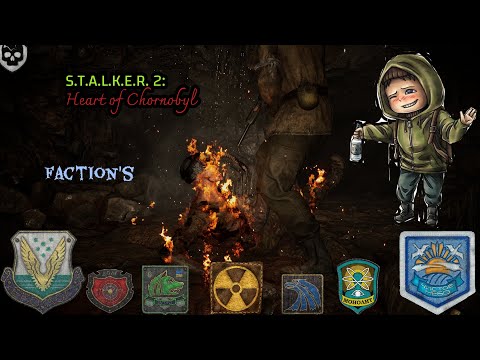
Because these groups are so well armed, encounters with them test your gear more than almost any other fight in the game. If you expect to end up on the wrong side of a militarized faction, it is worth reviewing the best weapons and where to find them before you commit to that path.
Spark, Freedom and the idealists
Spark is a faction of scientists and idealists who see the Zone not as a menace but as a phenomenon to be studied, understood and perhaps harnessed for humanity's benefit. They stand in deliberate contrast to the groups that want the Zone locked down, and their vision is one of knowledge over control.
Freedom, the long-running counterpart to Duty, believes the Zone should remain open to all and resists any attempt to wall it off or militarize it. Where Duty wants order and containment, Freedom wants the Zone to stay wild and accessible. The tension between these two philosophies is one of the series' defining conflicts, and it frames many of the decisions you will weigh.
These idealist factions illustrate why there is rarely a clean answer in the Zone. Study and openness sound noble, but they carry their own risks, just as containment and control do. The game tends to present each faction's worldview as internally coherent, which is what makes choosing between them genuinely difficult.
Monolith and the hostile groups
Monolith are the fanatics of the Zone, devoted to a mysterious object of worship and almost always hostile. They are among the most dangerous human enemies you will face, fighting with zealous commitment rather than the self-interest that governs most stalkers. Bandits round out the hostile side, opportunists who would rather rob you than reason with you.
Dealing with these groups is less about diplomacy and more about survival, which makes your gear and positioning critical. Monolith in particular do not negotiate, so preparation before an encounter matters far more than anything you could say to them.
How reputation and standing shape your run
Beyond the headline story choices, your ongoing standing with the Zone groups colors the texture of a playthrough in smaller ways. Being on good terms with a faction generally means its members treat you as a friend in the field rather than a target, which makes travel through their territory far less fraught. Fall out of favor, and routes that were once safe become gauntlets.
This is why your actions carry weight even outside scripted decisions. Helping a group with a side task, or choosing not to fire on its members during a tense moment, can smooth your path through the regions they hold. The Zone remembers how you behave, and that memory can be the difference between a quiet walk and an ambush.
It also means there is rarely a cost-free choice. Siding with one faction, whether formally in a quest or informally through your conduct, can sour your relationship with its rivals. Players who try to please everyone often find they have committed to no one and reaped the benefits of neither, so a measure of deliberate allegiance usually serves you better than fence-sitting.
The upshot is that factions reward players who treat the Zone as a living place with its own politics rather than a shooting gallery. Deciding whom you want as allies, and acting consistently toward that goal, gives a playthrough a throughline and makes the world react to you in ways that feel earned.
When the story brings you to a genuine crossroads between factions, it is natural to want the objectively correct answer, but the game is deliberately built so that none exists. Each side offers a coherent vision of what the Zone should be, and the choice is meant to reflect your own judgment rather than a hidden best path. There is no faction that is simply right.
The most satisfying way to approach these moments is to decide what you believe the Zone is for, then act on it. If you think it should be studied and understood, that points one way; if you think it is a danger to be contained, that points another. Treating the decision as role-play rather than optimization tends to produce a more memorable playthrough, and because these choices can be weighty and lasting, it is worth pausing to consider the likely consequences before you commit rather than reacting in the heat of the moment. A choice you make with your own reasoning behind it, even an imperfect one, will almost always feel more rewarding in hindsight than one you rushed, because the Zone is at its best when its hardest decisions are genuinely yours to own. That sense of authorship is a large part of why the series is remembered, and it is worth slowing down to savor rather than rushing past in search of an optimal result that was never meant to exist.
What siding with a faction means
Because the Zone's factions are tied to the story, siding with one is a narrative commitment rather than a menu toggle. Your choices during pivotal quests can earn you allies, make enemies, and steer the ending. There is no universally correct faction; the right choice depends on the story you want to tell and the world you want to leave behind.
If you are a completionist chasing every outcome, the Platinum trophy on PS5 rewards thorough play across the game's systems. The STALKER 2 Platinum trophy service is a legitimate option for players who want the completion without the full grind, done for you rather than run as a cheat. You can find the rest of our coverage on the STALKER 2 page.
Frequently Asked Questions
Can you join factions in STALKER 2?
Not through a formal rank-based membership. Your relationship with a faction is expressed through story choices and standing, deciding who you help and who you fight.
Who are the Ward?
The Ward are a militarized, well-equipped faction that seeks to control and secure the Zone. They are among the better-armed human groups you encounter.
What is the difference between Duty and Freedom?
Duty wants the Zone contained and ultimately destroyed to protect the outside world. Freedom believes the Zone should stay open and wild. They are long-standing ideological opposites.
Who are Spark?
Spark are scientists and idealists who view the Zone as a phenomenon to study and understand rather than a threat to eliminate.
Are Monolith always hostile?
Almost always. Monolith are fanatical devotees who fight with zealous commitment, making them some of the most dangerous human enemies in the game.
Does my faction choice change the ending?
Yes. Faction-related decisions during key quests can affect which characters survive, which questlines open, and how the story concludes.