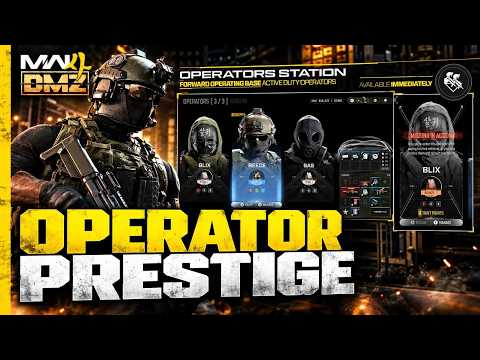
MW4 DMZ operators are no longer just skins. In Modern Warfare 4, each Active Duty Operator is a persistent character with their own Backpack, Loadout and trait tree, and how well you extract decides how fast they grow. Your roster works like a set of separate characters sharing one Bank and one Stash.
Below is how Active Duty slots, Dog Tag levels, the three trait trees, MIA rescues and Operator Prestige work, based on Activision's official FOB guide and developer interviews published ahead of the October 23, 2026 launch.
Active Duty slots: how many Operators you can run
You recruit an Operator into an open Active Duty slot. Everyone starts with two slots and can unlock another by leveling up in DMZ. The Vault Edition starts you with three.
Once recruited, that Operator is locked to the slot until you dismiss them, and the same Operator cannot fill two slots. You can still change their skin. Activision calls Operators "generally a cosmetic preference" whose real value comes from the traits they earn by surviving deployments.
The idea comes from the old DMZ. Infinity Ward's Joe Cecot explained that Active Duty slots were added to that beta after launch because it had no persistent inventory. In Modern Warfare 4 they become full characters, each with a persistent backpack, loadout and trait tree.
Dog Tag levels and Trait Points
Every Operator wears a Dog Tag that shows their progression. It has 18 levels across six tiers: Steel, Bronze, Silver, Gold, Damascus and Onyx, each with three steps. Each new Dog Tag level awards one Trait Point, so an Operator who reaches Onyx III has all 18 points.
Dog Tag progress comes from XP earned as that Operator, and the guide ties the level-ups to successful exfils. It is separate from your overall DMZ Player Level, which runs from 1 to 70 and keeps counting XP even when a run fails.
The tag also shows your Bounty status and how many enemy Operators you have killed. If you die, a rival can take your Dog Tag and display it in their own Dog Tag Case.
Bounties ride on each Operator's Dog Tag
PvP leaves a mark on the Operator who does it. When an Operator kills another player, they earn a Bounty listed on their own Dog Tag, and four player kills across deployments make that Operator Wanted. Higher Wanted levels make you easier to find: hunters can pay at Bounty Stations in Hajin to locate you, and at the top level your rough position may be visible to everyone.
The bounty is hard to shake. It clears if that Operator is killed and fails to exfil, if a rival extracts with that Operator's Dog Tag, or if you pay it off with DMZ Cash at a Bounty Station. That is another reason to give PvP to one dedicated Operator and keep a quieter one for looting runs.
The three trait trees: Warfighter, Scout and Survivalist
Trait Points are spent across three trees. There are 66 traits in total, 22 per tree: six Major traits that are always visible and 16 Minor traits that are randomized. Your first point in a tree goes to a random Minor trait, and later picks branch in pairs for Major traits and threes for Minor ones.
Choices are permanent. Once you pick a trait it is locked in, and with 18 points you can complete two trees or spread points across all three. Activision's guide lists these among its example traits:
| Tree | Focus suggested by the examples | Example traits |
|---|---|---|
| Warfighter | Combat | Adrenaline Burst (a kill resets tactical sprint), Viper Sense (hidden from thermal optics and AI targeting), Possum (self-revive into Last Stand once per match) |
| Scout | Looting and recon | Investor (slightly more cash extracted), Container Looter (chance of extra loot in containers), Field Crafting (craft from Common resources while deployed) |
| Survivalist | Support and survival | Faster Revive, Free Revive (repairs your first wound), Die Hard (reaching an exfil in Last Stand calls it automatically) |

MIA: what happens when an Operator is eliminated
If an Operator is eliminated during a deployment, they become Missing in Action and cannot deploy again until recovered. Recovery costs DMZ Cash, paid at the Operators station, and it keeps all of their traits. The price is set by their Trait Points, so the more developed the Operator, the more expensive the rescue.
A rescued Operator comes back without their gear, so you need to rebuild their Loadout before they deploy again. The alternative is to dismiss the MIA Operator and start fresh with a new recruit in that slot.
A few systems soften the cost. The 3D Printer offers MIA Recovery Discounts as a FOB upgrade, SERE Kits are described as kits for high-risk recoveries, and the Vault Edition Deployment Kit includes two Operator Rescue Beacons. Activision has not detailed how the beacons work ahead of launch.
How each Operator connects to the item system
This is where Operators and loot meet. DMZ Cash, Resources, 3D Printer Ingredients and the Stash are shared by every Active Duty Operator. Each Operator's Backpack and Loadout are separate, and each is at risk separately.
That split is deliberate. Joe Cecot described running a PvP-focused main alongside a "cash mule": if the main goes MIA, the second Operator hits vaults and Dynamic Ops to earn the rescue money. A Scout with Investor or Container Looter can farm materials and cash that your other Operators then spend.
The trade-off is cost. Every trait you add raises the rescue price, so a fully built Operator is a bigger risk on every deployment. The MW4 DMZ items guide explains exactly which gear survives a failed run.
Operator Prestige and permanent traits
Once an Operator has earned all 18 Trait Points and is not MIA, you can Prestige them. It is optional and separate from both the 1 to 55 player level and the 1 to 70 DMZ level. Prestige wipes the Operator's traits, consumes specific gear and charges DMZ Cash. In return, that Operator gains a random Permanent Prestige Trait that stays with them even if you dismiss them or change their skin.
- First Prestige: two Rare or better weapons with three attachment slots each, a Rare plate carrier, a Rare backpack, four Rare 3D Printer Ingredients and 200,000 DMZ Cash.
- Second Prestige: two weapons with four attachment slots, plus Epic plate carrier, backpack and Ingredients, and 300,000 DMZ Cash.
- Third Prestige and beyond: two weapons with four attachment slots, plus Legendary plate carrier, backpack and Ingredients, and 500,000 DMZ Cash.
An Operator can hold up to three Permanent Prestige Traits. From the fourth Prestige on, each new trait you are offered can replace one of the three or be discarded. Prestiging several Operators also earns calling cards and other rewards Activision is keeping classified for now.

Planning a roster before launch
These are planning ideas drawn from the systems above, not tested builds:
- Give each Operator a job: a Warfighter for PvP, a Scout for looting and cash, and, with a third slot, a Survivalist for squad support.
- Keep a low-trait Operator for risky runs. Their rescue is cheaper if things go wrong.
- Check Prestige gear needs early. Rare plate carriers, backpacks and Ingredients are consumed, so set some aside instead of wearing them into fights.
- Bank cash for rescues before you invest. A high-trait Operator stuck in MIA blocks a slot until you pay.
Vault Edition owners start with the third slot, while everyone else unlocks it through leveling. The edition question is covered in is MW4 DMZ free, the mode as a whole in MW4 DMZ explained, and the base in the MW4 DMZ FOB guide. The store's Modern Warfare 4 listings are on the Modern Warfare 4 hub.
Frequently Asked Questions
How many Operator slots are there in MW4 DMZ?
You start with two Active Duty slots and can unlock another by raising your DMZ level. Vault Edition owners start with three.
Can you reset or respec traits in DMZ?
Not freely. Once you pick a trait it is locked in. Prestige resets an Operator's traits, but it requires all 18 Trait Points and costs gear and DMZ Cash.
What happens when an Operator goes MIA?
They cannot deploy until you rescue them with DMZ Cash, which keeps their traits but returns them without gear. You can also dismiss them and recruit a new Operator.
Can you change an Active Duty Operator's skin?
Yes. Activision's FOB guide says you can change an Operator's skin in the Operators menu without dismissing them, and Permanent Prestige Traits stay tied to that Operator even after a skin change.
How many traits can one Operator have?
Up to 18 Trait Points from Dog Tag levels, spent across 66 traits in three trees, plus up to three Permanent Prestige Traits.
Do Operators change gameplay or just looks?
Activision calls the choice of Operator generally cosmetic, but each Operator's earned traits change how they play, from stealth against thermal optics to extra cash or faster revives. Two Operators wearing the same skin can play very differently.