
There are three Monster Hunter Stories games, and in release order they are Monster Hunter Stories (2016 on 3DS, remastered in 2024), Monster Hunter Stories 2: Wings of Ruin (2021) and Monster Hunter Stories 3: Twisted Reflection (March 2026). The first two share a continuing story, while Stories 3 jumps two centuries ahead with a new cast, so you can start with it if you prefer. Here is each game in order, where you can play it as of November 2026, and the best order for new players.
We checked dates, platforms and story setup against RPGSite's release announcements, the PlayStation Blog, The Nerd Stash's series explainer, GamesRadar's interview coverage and Final Weapon's report on the Wilds collaboration, in November 2026.
Every Stories Game in Release Order
The Stories series is Capcom's turn-based spin-off. Instead of hunting monsters with a giant sword, you play as a Rider who raises monsters, called Monsties, from eggs and fights alongside them. Each game stands on its own mechanically, but the first two are tied together by their characters.
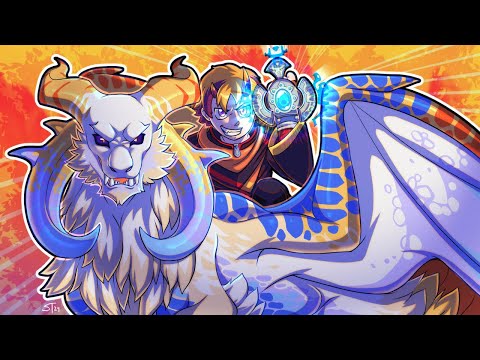
- Monster Hunter Stories: released for Nintendo 3DS on October 8, 2016 in Japan and September 8, 2017 in the US and Europe, according to RPGSite. A remaster arrived on June 14, 2024 for PlayStation 4, Nintendo Switch and PC through Steam.
- Monster Hunter Stories 2: Wings of Ruin: launched for Nintendo Switch and PC in July 2021, then came to PlayStation 4 on June 14, 2024, the same day as the first game's remaster.
- Monster Hunter Stories 3: Twisted Reflection: released March 13, 2026 on Nintendo Switch 2, PlayStation 5, Xbox Series X|S and PC through Steam, per RPGSite's launch announcement.
That 2024 double release is why many PlayStation players met the series only recently. Before it, the Stories games were mostly a Nintendo and PC affair.
Monster Hunter Stories (2016, Remastered 2024)
The first game introduces the Rider idea and the world's culture of bonding with monsters rather than hunting them. The Nerd Stash's summary describes the setup: the protagonist grows up in Hakum Village alongside friends Lilia and Cheval, meets the talkative Felyne Navirou, and learns about the Black Blight, a force that drives monsters into frenzies. It is a bright, gentle story aimed at a broad audience.
The 2024 remaster is the version most people will play now. RPGSite lists its main additions as full English and Japanese voiceovers and a new Museum mode with over 200 pieces of concept art, background music and developer sketches. If you own a PS4, a Switch or a PC, this is the easiest way in, and the voice acting alone makes it a better first experience than tracking down a 3DS copy.
- Platforms today: PS4, Nintendo Switch, PC (originally 3DS).
- Best for: players who want the full story arc in order.
- Tone: lighter and simpler than its sequels.
Monster Hunter Stories 2: Wings of Ruin (2021)
Wings of Ruin is the direct follow-up. The Nerd Stash explains that you play as the grandchild of the legendary Rider Red, and that Ena, a Wyverian girl, carries a Rathalos egg Red entrusted to her. It hatches into a Razewing Rathalos named Ratha, tied to a prophecy called the Wings of Ruin, and Navirou returns as your traveling companion. Knowing the first game makes those reunions land harder, but the sequel explains enough that newcomers are not lost.

Mechanically, Stories 2 keeps the series' turn-based foundation, the attack triangle in which Power beats Technical, Technical beats Speed and Speed beats Power, while widening the story's scale well beyond the first game's village beginnings. Playing it right after the original makes the jump in ambition obvious, and on PlayStation the two arrived together in 2024, which makes back-to-back play easy.
If you want to play in story order, finish the first game and go straight into this one. The characters overlap enough that the emotional payoff depends on it.
Monster Hunter Stories 3: Twisted Reflection (2026)
Stories 3 is the newest and most ambitious entry. RPGSite's announcement describes the premise: two centuries after a war that divided two kingdoms, twin Rathalos unexpectedly hatch from a single egg, setting off a story of forbidden lands and twisted fates. The PlayStation Blog adds that you play as the captain of the Rangers, a group that protects the eggs of endangered species and restores ecosystems, as a phenomenon called Crystal Encroachment spreads and Invasive Monsters multiply.
New systems lean into that ecology theme. The PlayStation Blog explains that you force Invasive Monsters back to their dens so you can take their eggs, and Habitat Restoration lets you release hatched monsters to rebuild populations. Monsters from Monster Hunter Wilds, including Chatacabra, Rey Dau and Arkveld, appear among the Monsties. Our Stories 3 monstie rankings cover which ones are worth raising first.
Light spoiler warning: the next paragraph mentions how Stories 3 connects to earlier characters. Skip it if you want to go in blind.
Because the game is set roughly 200 years after Wings of Ruin, The Nerd Stash notes that most of the earlier cast has faded into history. A few threads remain: Wyverians can live for centuries, so Ena appears again, and Rudy, the Prince's Palico, is a descendant of Navirou. GamesRadar's interview coverage carries the director's advice in its headline: do not worry about playing the first two before this one.
How Stories Differs From the Main Series
If you know World, Rise or Wilds, the Stories games will feel familiar in their monsters and unfamiliar in almost everything else. You are a Rider, not a Hunter: you collect eggs from monster dens, hatch them and fight alongside the Monsties that come out. Battles are turn-based rather than real-time, and Kotaku's Stories 3 tips explain that you cannot guard, so reading the enemy's attack type and countering it is your main defense.
Weapons still matter, but differently. In Stories 3, Kotaku notes that weapons deal Slash, Blunt or Pierce damage, that you can bring three into battle, and that matching them to each body part's weakness is the key to breaking parts. Filling the Kinship gauge lets you ride your Monstie, which restores its health, cures status effects and powers it up, and Kinship attacks are your strongest moves, though using one ends the ride. Stories 3 also gives you six battle companions, each with a side story that rewards you with stronger weapons, Monsties and recipes.
The result is a series that suits players who enjoy collecting and team building more than reflexes. It is also a gentle way to learn monster names and behaviors before trying the action games.
Which Order Should You Play Them In?
There are two sensible routes, and they depend on what you want from the series.
- Story order (1, 2, 3): best if you care about characters. You see Red's legacy, Ena and Navirou develop, and Stories 3's references mean more.
- Newest first (3, then 1 and 2): best if you want the most modern systems and graphics. Stories 3 is self-contained, and the older games become a fun look back afterward.
Whichever you pick, the core battle system carries across: read the monster's attack type, counter with the type that beats it and build Kinship to ride your Monstie. Players who come to Stories from the main series often wonder how much they need to know about hunting; the answer is very little, although familiar monster names help. If Stories gets you curious about the action games instead, our beginner weapon guide is a gentle first step into World, Rise or Wilds.
The series also crosses over with the main games. Final Weapon reports that the Wilds anniversary update on February 18, 2026 added a permanent Stories 3: Twisted Reflection collaboration side mission, and the PlayStation Blog notes that a Royal Palico Rudy armor set for Palicos is part of that tie-in. Our Wilds update history lists what else arrived in that patch.
Where to Play Each Game in November 2026
Platform support is uneven, so check your system before buying:
- PlayStation: Stories 1 and Stories 2 have PS4 versions released in June 2024, and Stories 3 is on PS5.
- Nintendo: Stories 1 (remaster) and Stories 2 are on Switch, Stories 3 is on Switch 2, and the original Stories launched on 3DS.
- PC: all three are on Steam.
- Xbox: Stories 3 launched on Xbox Series X|S.
Each entry is a full-length RPG rather than a short side story, so playing all three back to back is a real commitment. If you only have time for one, pick by platform first: Stories 3 for current consoles and Switch 2, or the 2024 versions of the first two for PS4 and Switch owners.
Starting the Original With a Head Start
If you are playing in story order and want to move through the first game faster, the store's Monster Hunter Stories Modded Starter Save begins right after the tutorial with max Zenny, all items at max, and max Rider and Monstie XP, so you can enjoy the story without grinding levels. It is applied to your profile and requires that you already own the game.
The page lists PS4 and PS5. Saves for Stories 2 and the main series are on the Monster Hunter store page.
Frequently Asked Questions
Do you need to play Monster Hunter Stories in order?
Not strictly. Stories 2 follows the first game's characters, so 1 then 2 is best for the story, but Stories 3 is set 200 years later and works as a starting point.
How many Monster Hunter Stories games are there?
Three: Monster Hunter Stories, Stories 2: Wings of Ruin and Stories 3: Twisted Reflection.
When did Monster Hunter Stories 3 come out?
March 13, 2026, on Nintendo Switch 2, PS5, Xbox Series X|S and PC.
Is Monster Hunter Stories on PS4?
Yes. The remaster of the first game and Stories 2 both released on PS4 on June 14, 2024.
Is Stories 3 connected to Stories 2?
Loosely. It is set about two centuries later with a new cast, though a few long-lived characters and descendants link back to earlier games.
Do you need to play the main Monster Hunter games before Stories?
No. Stories is a separate turn-based series, and knowing the monsters only adds a little extra recognition.