
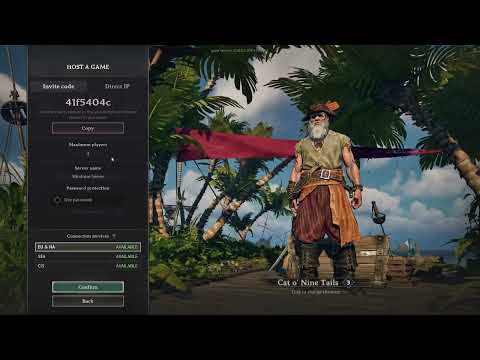
Windrose is a survival adventure that scales beautifully with friends. It supports co-op for up to eight players, with four recommended, and bringing a crew along changes the entire character of the game. Gathering goes faster, bases grow quicker, and naval combat becomes a genuinely coordinated operation rather than a solo juggling act. This guide covers how to get the most out of cooperative play, from dividing responsibilities on land to crewing a ship at sea.
Windrose is in Steam Early Access on PC from Kraken Express and Pocketpair, released 14 April 2026, so multiplayer features and balance are still being developed. I have kept specifics qualitative and cross-checked the co-op systems against the official Steam store page, the game's Steam community discussions, and the Windrose subreddit, all checked in October 2026. The exact player cap behavior and co-op features may change with updates, so confirm the current details on your own save rather than treating anything here as fixed.
How co-op reshapes the game
The biggest thing a crew brings is parallelism. When you play solo, every task falls to you in sequence: gather, craft, build, fight, sail. With a crew, those tasks happen at once. One player gathers while another crafts and a third scouts or defends, and the whole operation moves at a pace a solo player simply cannot match. This is why co-op feels so different; it is not just more hands on the same work but many kinds of work happening simultaneously.
The recommendation of four players is worth taking seriously. Four is enough to divide the core responsibilities meaningfully, gathering, crafting and base work, combat, and the demands of a ship, without the group becoming so large that coordination turns chaotic. You can play with up to eight, which can be a lively, powerful crew, but it asks for more communication and organization to keep everyone productive rather than tripping over one another. Match your group size to how well your crew communicates.
There is a social dimension to this that is easy to overlook. A larger group is more fun in the moment but harder to keep pointed in one direction, and nothing drains a co-op session faster than players quietly working at cross purposes. Smaller crews coordinate almost effortlessly, while bigger ones benefit from a little more structure, even something as light as agreeing at the start of a session on the one or two goals everyone is working toward. The right number is not simply the most friends you can gather but the number your group can keep aligned, and many crews find that a focused team of four accomplishes more, and enjoys it more, than a scattered eight.

Divide roles, but stay flexible
Because Windrose has no character classes, nobody is locked into a role, which makes co-op division of labor flexible and fluid. A sensible crew loosely assigns responsibilities based on what each player enjoys and what the group needs, perhaps one player who focuses on keeping the base and crafting running, another who specializes in combat and frontline fighting, and others who flex between gathering, building, and sailing. These are preferences, not fixed classes, so anyone can pick up any task when the situation demands.
The strength of this flexibility is that your crew can adapt to the moment. When you are building up your base, more hands turn to gathering and construction. When you are heading out for a naval fight, the group reorganizes around crewing the ship. Because every player develops their own stats, talents, and loadout, a crew naturally ends up with complementary strengths over time, and leaning into those while staying ready to cover for each other is the heart of good co-op play. Our Windrose base building guide covers the shared base that anchors a crew.
Crewing a ship together
Naval combat is where co-op truly comes alive. A single player sailing into a ship battle must steer, manage positioning, work the cannons, and react all at once, which is demanding. A crewed ship divides those jobs: one player handles the helm and positioning while others manage the cannons or prepare to board. This division transforms a sea battle into a coordinated operation and lets a crew punch far above what any of them could manage alone.
This also means your ship choice should account for your crew. The larger vessels are built with multiple hands in mind and come into their own with a coordinated team, whereas a solo-friendly ship can feel underutilized with a full crew aboard. Talk as a group about what you are sailing into and who takes which station before the fighting starts, so nobody is scrambling mid-battle. Our Windrose naval combat guide explains the ship-to-ship mechanics your crew will be executing together.
It pays to rehearse your crew's naval roles on easier engagements before you commit to a hard one. Coordinating a helm, gun crew, and boarding party in the heat of a dangerous battle is a lot to ask of a group that has never done it together, and a few low-stakes fights let everyone learn their station and how to communicate under pressure. Decide in advance who calls the shots on positioning, since a ship cannot steer in two directions at once, and agree on simple signals for when to close for a boarding action or peel away to fight at range. A crew that has practiced together turns the chaos of a sea battle into something that feels genuinely coordinated, and that coordination is one of the most satisfying experiences the game offers.
Communication and shared goals
The crews that enjoy Windrose most are the ones that communicate and agree on goals. Because there is so much to do, a group that pulls in different directions, one player wanting to raid a distant dungeon while another is mid-way through a base expansion, can feel scattered and inefficient. Taking a moment to agree on what the group is working toward in a given session keeps everyone's effort pointed the same way and makes the whole adventure feel purposeful.
Shared resources and a shared base reward a little organization. Agree on how you store and use communal materials so one player's crafting project does not accidentally drain what another was saving. Keep your shared storage tidy and your base laid out so everyone can find what they need. These small social agreements prevent the friction that can otherwise build up in a cooperative survival game, and they let the crew focus on the fun of adventuring together rather than untangling misunderstandings.
It also helps to think about how your characters develop in parallel. Because every player builds their own stats, talents, and loadout, a crew that coordinates its growth can deliberately cultivate complementary strengths, with one member leaning into frontline combat while another specializes in the production and crafting that keeps everyone supplied. You do not need to plan this rigidly, but a quick conversation about who enjoys what can turn a group of generalists into a genuine team whose members each bring something the others lack. Over many sessions, those complementary strengths compound into a crew that handles land and sea far more smoothly than the same players would alone.
Pacing matters too, especially when players can join for different amounts of time. A crew where some members play far more than others can drift apart in capability, leaving the occasional player feeling left behind. Agreeing on what counts as shared progress, keeping communal projects as the backbone of your sessions, and looping returning members into the current plan all help keep a group playing together rather than splintering. The best co-op crews treat the health of the group as a shared responsibility, not just the sum of each player's individual progress.
None of this needs to be heavy-handed. The simplest crews run on nothing more than a quick check-in at the start of a session and a habit of saying what you are about to do, so nobody is surprised when the ship sets sail or a wall comes down. That light coordination costs almost nothing and prevents most of the friction that would otherwise creep in. Keep it casual, keep it consistent, and the teamwork will feel less like management and more like the natural rhythm of adventuring alongside people you enjoy playing with.
Co-op is still growing in Early Access
As with everything in Windrose, remember that the game is in Early Access and its multiplayer is still being developed. Features, the way the player cap behaves, and co-op balance may change as the developers continue working on the game. Rather than relying on the exact current state, lean on the enduring strengths of good co-op: divide work sensibly, stay flexible, communicate, and agree on shared goals. Those habits make any cooperative session better regardless of how the specifics evolve.
Getting your crew sailing together sooner
Getting a whole crew equipped, leveled, and ready to sail together takes time, especially if some members are starting fresh. If part of your group would rather spend their hours adventuring with the crew than grinding to catch up, you can browse options on the Windrose accounts and services page, which is an honest time-saver rather than a cheat. A crew still has to coordinate and play well together whatever their starting point, so use the teamwork principles in this guide to make the most of your shared adventure on land and at sea.
Frequently Asked Questions
How many players can play Windrose co-op?
Windrose supports co-op for up to eight players, with four recommended. Four is enough to divide core responsibilities meaningfully, while eight is a powerful crew that demands more communication and organization to stay productive.
How should a co-op crew divide roles?
Loosely, based on what each player enjoys and what the group needs. Because there are no classes, roles are flexible preferences rather than fixed assignments, so anyone can pick up gathering, crafting, combat, or sailing as the situation demands.
Why is co-op better for naval combat?
A crewed ship divides the jobs of steering, positioning, working the cannons, and boarding, turning a sea battle into a coordinated operation. A solo player must juggle all of that alone, so a crew punches far above what any one player could manage.
Can I still play Windrose solo?
Yes. Windrose is fully playable solo, though you handle every task yourself. Recruiting NPCs to speed up harvesting and production helps a solo player keep pace with the resource demands that a crew would otherwise share.
How do we avoid friction over shared resources?
Agree on how you store and use communal materials so one player's project does not drain what another was saving. Keep shared storage tidy and the base organized, and align on shared goals for each session.
Will co-op features change in Early Access?
Likely yes. Windrose is in Early Access, so multiplayer features, player cap behavior, and co-op balance are still being developed and may change. Verify the current state on your own save rather than relying on older guides.