
Players search for the "best build" in Monster Hunter Wilds hoping for one perfect loadout, but the honest answer is that the strongest builds all follow the same handful of principles rather than one magic set. Once you understand how offensive skills stack and how armor, decorations, and your weapon fit together, you can assemble a build that fits your weapon and your playstyle instead of copying someone else's.
The guidance below reflects community consensus from sources such as Fextralife, GameRant, PowerPyx, and the Monster Hunter Wilds subreddit, cross-checked in October 2026. Because Wilds is patched and balanced regularly, I have kept specific numbers qualitative where the exact values can change between title updates.
What "best build" really means in Wilds
A build in Monster Hunter Wilds is the combination of your weapon, your five armor pieces, your charm, and the decorations slotted into all of them. The goal of an endgame build is to raise your real damage output against the monsters you fight most, while keeping enough defense and utility that you are not constantly carting. Raw attack is only part of the picture; the biggest gains come from affinity (critical hit chance) and the multipliers that reward landing those criticals.
Because Wilds lets you mix set pieces freely and build your own talismans, you are not locked into a full armor set. Most strong builds take a few pieces for their skills, then fill the gaps with whatever gives the slots and secondary skills you need. Thinking in terms of skill goals rather than named sets is the single biggest mindset shift that separates a good build from a mediocre one.
It also helps to think in terms of a budget. Every build has a limited number of skill slots once you account for armor, decorations, and your charm, so you are always trading one skill against another. A skill that adds a reliable five percent to your damage is worth more than one that adds ten percent only when a rare condition is met. Decide what your build is for first: a general-purpose loadout you take into any hunt, or a specialist set tuned to a particular monster or weapon. That decision tells you which trades are worth making and keeps you from spreading your slots so thin that nothing reaches a useful level.
The offensive skill core almost every build shares
Nearly every high-damage build is built around a stack of critical-hit skills, because affinity scales so well with the bonus damage criticals do. The usual foundation looks like this:
- Weakness Exploit raises affinity when you hit a monster's weak points or exposed wounds, which is where you should be aiming anyway.
- Critical Boost increases the damage each critical hit deals, so it pairs directly with any affinity source.
- Critical Eye adds flat affinity regardless of where you hit, smoothing out your damage.
- Attack Boost adds raw attack and, at higher levels, a little affinity on top.
- Agitator boosts attack and affinity while a monster is enraged, which is a large share of any fight.
Situational multipliers like Maximum Might, Burst, Peak Performance, or Resentment can push damage higher, but they come with conditions. Build your reliable core first, then add conditional skills only if you can actually keep their conditions active during a real hunt.
The reason this core works so well is the way affinity and Critical Boost interact. Affinity is your chance to land a critical hit, and Critical Boost raises how much extra damage each critical does. On its own, a high affinity figure is only worth a modest average increase, but paired with Critical Boost it becomes one of the largest multipliers available. Weakness Exploit then ensures that affinity is highest exactly where you should be attacking, so the three skills reinforce one another rather than competing. This is why you will see nearly every damage build in Wilds reach for the same handful of skills first: they are not a fashion, they are the most efficient use of your limited slots.
Defense and comfort skills worth a slot
Pure damage builds look great on paper and fall apart when you are flat on your back. A few defensive and quality-of-life skills keep your uptime high, which is itself a damage increase because a hunter who is attacking does more than one who is healing. Divine Blessing reduces incoming damage at random, which is a reliable survivability pick. Depending on your weapon, Guard and Offensive Guard reward blocking, while evade-focused weapons benefit from Evade Window or Evade Extender. Health-management skills and Flinch Free can quietly save hunts, especially in multiplayer where allies knock you around.
A useful way to decide how many defensive skills to run is to be honest about your own consistency. If you routinely finish hunts without carting, you can afford to lean further into offense and drop a comfort skill or two. If you find yourself getting hit by the same attacks, a point in Divine Blessing or a health skill will raise your real damage more than another offensive level, because it keeps you upright and attacking. Defense in Monster Hunter is not the opposite of damage; it is what lets you spend more of the hunt actually dealing it.
If you are still deciding which weapon to anchor your build around, our Wilds weapon tier list breaks down how each of the 14 types performs so you can pick one before you commit decorations to it.
Decorations: the glue that finishes a build
Decorations are how you turn a pile of armor into a finished build. Single-skill decorations let you top up a skill you are short on, while weapon and group decorations unlock skills tied to specific gear. The practical approach is to decide your target skill levels first, slot the skills your armor cannot reach on its own, and treat leftover slots as a chance to add comfort. Do not hoard decorations you are not using; a skill sitting in your box does nothing.
Farming the decorations you want takes time, so it helps to understand how the drop and crafting systems work before you grind blindly. Our guide to decorations in Wilds covers how to target the skills you actually need instead of relying on luck.

Matching the build to your weapon
The same skill core behaves differently on different weapons. Fast multi-hit weapons like Dual Blades and Bow love affinity and Critical Boost because they land so many hits per second. Heavy, committed weapons like Great Sword value raw attack and skills that reward big single blows, since each swing is worth so much. Blocking weapons want Guard and Offensive Guard, while Insect Glaive and aerial styles care about stamina and mounting. Build your core first, then tilt the final few skill levels toward what your weapon actually does.
Set and group bonuses are the last layer to consider. Some armor pieces contribute toward a bonus that activates once you wear a certain number from the same group, granting an extra skill or effect. These can be powerful, but they also constrain your build by forcing several pieces together, which costs you the freedom to pick the best individual pieces. Weigh the bonus against what you give up: if the set bonus happens to grant a skill you wanted anyway, it is close to free, but if it forces pieces with poor slots or irrelevant skills, you may be better off skipping it. Treat bonuses as a tool, not a requirement.
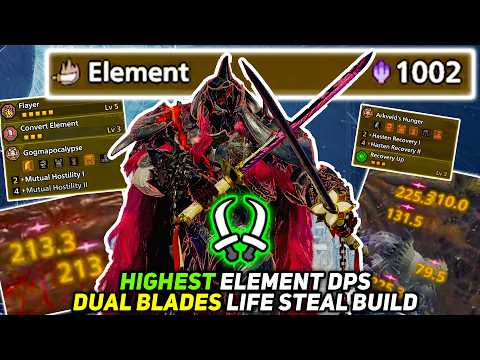
Element and status builds are their own path. If a weapon has a strong elemental option, stacking element attack skills and the matching element criticals can out-damage a raw build against a monster that is weak to that element, especially on weapons that hit often. This is where Artian weapons shine, because you can tune their bonuses toward a specific element.
Finally, remember that a build is never truly finished in a game that receives regular updates and new monsters. The sensible approach is to settle on a strong, versatile loadout that handles most content, then keep a short list of situational swaps for the fights where a different element, a defensive skill, or a status approach serves you better. Resist the urge to rebuild from scratch every time a new piece of gear appears; instead, ask whether it meaningfully improves your existing targets. A hunter who understands their build can adapt it in minutes, while one who only copied a loadout is stranded whenever the meta shifts. Understanding beats memorization every time.
If you want a strong account without the full grind
The legitimate path to a great build is straightforward: reach the endgame, farm Artian parts and decorations, and craft the talisman and armor that suit your weapon. It is genuinely satisfying, and most of the fun of Wilds is in that loop. It is also time-consuming, and not everyone has dozens of hours to pour into drop tables.
If you would rather skip the grind and start from a loaded account, the Monster Hunter Wilds full account boost provides a maxed, built-out starting point on PC and PlayStation so you can experiment with gear immediately. You can compare it and other options on the Monster Hunters page. You still need to own the game, and it is delivered as a service or save rather than a cheat you run yourself.
Frequently Asked Questions
Is there one best build in Monster Hunter Wilds?
No. The strongest builds all follow the same principles, but the ideal loadout depends on your weapon, the monster, and your playstyle. Learn the principles and adapt.
What skills should I prioritize first?
Start with a critical-hit core: Weakness Exploit, Critical Boost, Critical Eye, Attack Boost, and Agitator. Add conditional and defensive skills afterward.
Do I need a full armor set?
Rarely. Wilds lets you mix pieces freely, so most builds take a few pieces for their skills and fill the rest for slots and secondary skills.
Is affinity better than raw attack?
They work together. Affinity scales especially well on fast multi-hit weapons when paired with Critical Boost, while slow weapons also value raw attack per swing.
Should I build element or raw?
Raw is reliable across all monsters. Element can out-damage raw against a monster weak to that element, particularly on fast weapons and Artian weapons tuned for it.
Will builds change with updates?
Yes. Wilds is balanced regularly, so exact best-in-slot gear shifts. The core skill principles stay stable, which is why this guide focuses on them.