
Rarity in Fortnite is not about the color of the item card. The in-game rarity tier tells you almost nothing about how hard a skin is to obtain. A skin is truly rare when it is no longer available and realistically never coming back, either because it was a launch-era reward or because it was locked behind a promotion that has long since ended. That is what collectors actually mean when they talk about rare skins.
Because the Item Shop rotates and Epic occasionally brings things back, the landscape shifts. I cross-checked the general history of these outfits against the Fortnite Wiki on Fandom, long-running community shop trackers, and coverage from IGN and GameRant, all checked in October 2026. Where an outfit's future is uncertain, I have said so rather than promising it will never return, because that kind of promise is exactly what scammers rely on.
What makes a skin actually rare
There are a few distinct paths to rarity. The first is launch and early-season exclusivity. Outfits that came from the very first Battle Pass seasons or from early shop rotations are rare simply because far fewer people were playing then, and some of those items have not rotated back in a very long time. The second is promotional tie-ins: skins given out through events, hardware bundles, platform promotions, or limited-time challenges that cannot be completed anymore. The third is account-linked rewards tied to subscriptions, Twitch or Prime offers, or pack ownership, which you simply cannot earn if you missed the window.
Standard Item Shop skins, no matter how flashy, are generally not rare in this sense. If a skin is on a normal rotation, anyone with V-Bucks can wait for it to come around again. Rarity lives at the edges, in the things that are gone. This is the single most important mental model for a collector, because the community sometimes uses "rare" loosely to mean "expensive" or "old," when the only kind of rarity that holds value is genuine unavailability.
It is also worth separating rarity from desirability. Some unavailable skins are coveted, and some are forgotten. A skin that was only given out in a narrow promotion but that nobody particularly wants is technically rare but carries little prestige, while a famous early outfit can be both scarce and endlessly discussed. When you hear a skin called the "rarest," it usually means it combines genuine scarcity with a reputation, and those two things do not always travel together.

A word on how value is talked about in the community: because truly rare skins cannot be bought individually, their worth is discussed in terms of the accounts that hold them, and those conversations can get distorted by hype. A skin being described as worth a fortune says more about demand and reputation than about any fixed price, and reputations shift when Epic reissues an item or when community attention moves on. Treat any valuation you see as a snapshot of sentiment rather than a hard figure, and remember that the only thing giving a cosmetic its scarcity is the fact that it is currently unavailable, a status that is never guaranteed to be permanent.
The legendary launch-era outfits
The most famous "rare" skins are the ones from Fortnite's earliest days. These are the outfits long-time players point to as status symbols, the kind that signal an account has been around since the beginning. Their rarity comes from timing rather than any special property, and the community has debated for years whether Epic should ever reissue them. Epic has historically been cautious about reviving the oldest exclusives precisely because their scarcity is part of their appeal, though the company has shown over time that it rarely rules anything out permanently.
Because I cannot promise the current status of any individual launch skin without it changing under me, the honest advice is this: if you see an old early-season outfit described as never-returning, verify that claim against a current shop tracker before you treat it as gospel. Several items once called "impossible" have resurfaced in some form, and others genuinely have not. The safest assumption is that scarcity today does not guarantee scarcity forever, which is a good reason not to overpay on the premise that something can never come back.
Promo and event-locked skins
A large chunk of Fortnite's rarest cosmetics were never sold at all. They were handed out through console bundles, mobile promotions, physical events, or limited challenge windows. Once the promotion ends, the only way onto an account is if it was claimed at the time. These are often rarer in practice than the famous launch skins, because the distribution window was narrow and the requirements were specific.
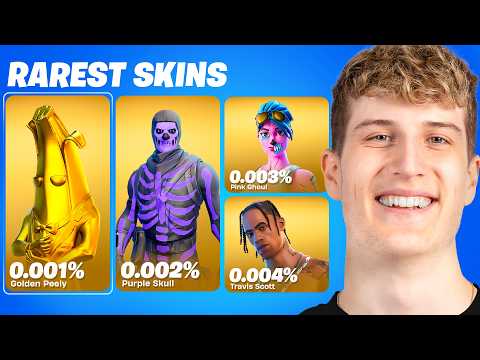
This category is also where the most misinformation lives. Because the skins are desirable and unobtainable, you will find plenty of accounts and sellers claiming to offer them. Be skeptical. The only legitimate way these cosmetics exist on an account is that the account itself claimed them during the live window. There is no button Epic can press to grant you a long-expired promo skin after the fact, and anyone who says otherwise is either confused or dishonest.
The practical takeaway for a collector is to treat the provenance of a promo skin as the whole story. If an account genuinely holds a promotional outfit, it is because that account participated in the promotion, and that history is part of what gives the cosmetic its value. A claim that a promo skin can be transferred, gifted, or added to a different account should set off every alarm you have, because the game simply does not work that way.
Crossover and licensed skins add an extra wrinkle to the rarity conversation. When a cosmetic is tied to an outside brand, Epic's ability to bring it back can depend on a licensing agreement rather than purely on its own choice, which means some crossover outfits are genuinely harder to predict than Fortnite's home-grown items. An original Fortnite skin can theoretically return whenever Epic decides, but a licensed one may be gone the moment the deal lapses. This does not make every crossover skin rare, since many are sold widely while the partnership is active, but it does mean a popular licensed outfit that has not reappeared is worth treating as a real question mark rather than assuming it will cycle back like a normal shop item.
Why you cannot just buy a rare skin alone
Fortnite cosmetics are bound to the account that owns them. You cannot gift an owned outfit to another account, and you cannot trade individual skins between players. This is a deliberate design choice by Epic, and it is the single most important thing to understand about skin collecting. It means that the only way to "own" a rare outfit you missed is to own the account it lives on. That reality is exactly why rare-skin accounts have value, and also why you should be careful about where any account comes from.
This binding is why the entire concept of a standalone skin sale is a fiction. Any offer framed as selling you a single rare skin to apply to your own account is describing something the platform does not permit. When value legitimately changes hands, it is the whole account that moves, cosmetics and history and all. Understanding that one rule protects you from the majority of scams that circle the rare-skin scene.
How to build a collection going forward
If you are starting now, the realistic goal is not to chase skins that are already gone. It is to never miss the next one. Keep the game installed and check in during major events, crossover seasons, and anniversary celebrations, because that is when limited and promo cosmetics appear. Claim every free reward track you can, link your account to any legitimate first-party or partner promotions you qualify for, and keep a small V-Bucks balance so you can grab a limited shop item the day it appears rather than hoping it returns. Today's claimable cosmetic is tomorrow's rare skin.
Keeping a modest V-Bucks reserve is the quiet secret of collectors who never miss an item. Limited cosmetics sometimes appear in the shop for a single day, and if you have to stop and buy currency first you may miss the window entirely. A small standing balance turns a time-sensitive opportunity into a simple purchase, and over a few years that discipline is what separates a deep locker from one full of regrets about the item that got away.
Getting a loaded account the honest way
If your heart is set on an account that already carries a deep cosmetic locker, the store handles this openly. The premade Fortnite accounts are listed with their contents stated up front, so you know what cosmetics and V-Bucks you are actually getting rather than trusting a vague promise. You can browse the full range on the Fortnite accounts and services page. Whatever you do, avoid anyone claiming to "inject" a specific expired promo skin onto your existing account, because that is not something that legitimately exists. If you are weighing an account purchase, it also pays to read our guide on how to win in Fortnite and dial in your best settings so the account actually performs for you.
Frequently Asked Questions
Does the in-game rarity color mean a skin is rare?
No. The rarity tier is cosmetic. A skin is only genuinely rare if it is unavailable and unlikely to return, regardless of its item-card color.
Can I trade or gift a rare skin to a friend?
No. Individual owned cosmetics cannot be traded or gifted between accounts. A skin lives on the account that unlocked it, which is why rare-skin accounts exist at all.
Will the oldest launch skins ever come back?
Epic has been cautious about reissuing its earliest exclusives but rarely rules anything out forever. Always check a current shop tracker before trusting a "never returning" claim.
Can someone add an expired promo skin to my account?
No. Expired promotional skins can only exist on accounts that claimed them during the live window. Anyone promising to inject one onto your existing account is not offering something real.
What is the best way to avoid missing future rare skins?
Stay active during major events and crossovers, claim every free reward track, link legitimate partner promotions, and keep a small V-Bucks balance so you can buy limited items the moment they appear.
Are promo skins rarer than famous launch skins?
Often yes. Promotional skins had narrow distribution windows and specific requirements, so in practice fewer accounts hold them than some of the better-known early-season outfits.