
Artillery in Wardogs comes in two forms: the buildable L81 mortar, placed with the Large Hammer at a FOB, and the SPH-2, a self-propelled 155mm gun that unlocks on the Driver track at level 31 in Season 2. Both fire indirectly by bearing and elevation rather than a crosshair, so the skill is in finding the range, keeping the guns supplied and staying alive while you shoot. Here is how each works as of November 2026.
We checked this against the Season 1 changelog and Season 2 patch notes on Steam, the Wardogs Steam store page, and artillery guides from AllThings.How, PCGamesN and Dexerto, in November 2026.
Two Kinds of Artillery: Mortar and SPH-2
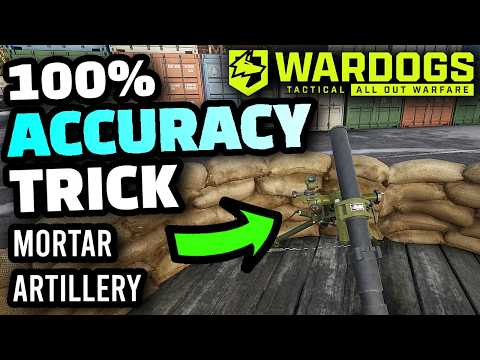
The Steam store page sells the fantasy directly, describing the option to man an artillery tank and rain down destruction on the enemy. In practice that means two tools with very different roles. The L81 is an 81mm mortar that a Support player builds on the ground. It is cheap, short-ranged and best for shelling the near side of the control zone from a fortified position.
The SPH-2 is the artillery tank. Dexerto's vehicle page lists three seats, a 105 liter fuel tank, a top speed of 65 km/h and an L52 cannon alongside an MG3A1 coaxial gun and an M249. It reaches much farther than the mortar, which lets it sit well back from the fight, but it is a large, expensive vehicle that dies quickly once enemies find it.
Neither is a standalone win button. The zone is held by players standing in it, so artillery works best as support: breaking up enemy FOBs, hitting vehicles parked at a tower and punishing infantry bunched on an approach route.
Unlocking and Paying for It
Where you unlock artillery has moved twice. At launch, the Season 1 changelog moved the artillery tank to Career level 90 and raised its unlock to $500,000, to make it a long-term goal. Season 2 reversed much of that: the SPH-2 now sits on the Driver track at level 31 with a $350,000 unlock, and the patch notes also changed artillery to give Driver XP instead of Support XP. That makes the SPH-2 part of the same path that leads drivers through the Wolf-110, the T-72B3 and the Flakpanzer Gepard.
The mortar sits behind the Large Hammer. PCGamesN's mortar guide notes that it is only available to Support players at level eight, when the top-tier hammer unlocks, and the Season 1 changelog set the Large Hammer's unlock at Support level 8 for $75,000 and its vendor price at $2,400. Season 2 then made the mortar itself far more expensive to build: the L81 now costs 600 build supplies instead of 150, part of a full pass meant to make structures a considered investment rather than something you spam.
If you are deciding which track to push toward artillery, our overview of every Wardogs role track shows what else Driver and Support unlock along the way.
Reading the Sight and Finding Range
According to AllThings.How, the L81 sight shows the compass bearing across the top, range in meters on the left and elevation in mils on the right. To aim, ping the target on the tactical map with the middle mouse button, then turn the tube until the waypoint diamond sits on the center line. Coarse traverse is on the movement keys and fine adjustment on the mouse, which matches PCGamesN's description of using WASD for big moves and the mouse for small tweaks.

Range is the harder part. AllThings.How describes marking both the gun and the target with Mark Coordinates on the map, then working out the straight-line distance from the grid difference, or simply counting the 100 meter small grid squares. A target spotted by a teammate shows its distance when you hover over it, which is much faster, and it gives a 3D marker the gun can lock onto. Each gun uses its own elevation scale, so the numbers from the mortar do not carry over to the SPH-2.
After each shot, the camera follows the round to impact. Use where it lands to correct your next shot, and correct in small steps. AllThings.How notes that pressing C skips the shell camera between shots, and that the mortar can load up to three rounds, which lets you put several shells on a confirmed target quickly. Height matters as well: firing downhill stretches the mortar's reach and firing uphill shortens it.
Ranges, Arcs and Damage
The two guns cover very different distances. AllThings.How measured the figures below; BULKHEAD has not published official artillery stat sheets, so treat these as community measurements that can shift with balance patches.
| Stat | L81 Mortar | SPH-2 |
|---|---|---|
| Range | 50 to 700 m | 745 to 2,660 m |
| Reload | 6.5 s | 27 s |
| Shell damage | 120 | 450 (155mm HE) |
| Blast radius | 10 m | 20 m |
| Arcs | One | Low and high |
The SPH-2's low, flat arc cannot reach targets inside roughly 1,070 meters on level ground, so close fire missions need the high arc. Past about 2,600 meters the two arcs converge and accuracy suffers. The 155mm shell is also far tighter in grouping than the mortar's, which is why the SPH-2 can hit a single vehicle at long range while the mortar is better treated as an area weapon.
One practical warning from the same guide: walls, sandbags, razor wire or other structures directly in front of the tube can detonate a shell on the way out, so check your firing lane before you build around the gun.
Keeping the Guns Fed
Artillery is a logistics problem as much as an aiming one. The mortar draws on Ammo supplies stored in the FOB, and Season 2 doubled the munition supplies each mortar restock consumes, from 75 to 150, specifically to reduce the number of shots a single pallet drop can feed. It also added a new firing animation in which the player drops each shell into the tube as it fires, slowing the rate of fire. Shells for the SPH-2 must be hauled forward as well, and the Season 1 changelog made 155mm, 122mm and flare deployables take up more loadout space.
That makes artillery a team activity. A pilot or driver who keeps ammo flowing earns delivery streak bonuses while keeping the guns firing; our helicopter flying guide covers the transport side, and our FOB guide explains how supplies get stored where builders and gunners can use them. AllThings.How also points out that a wrench is needed to repair a damaged SPH-2 before the fire mission can continue, and that shutting off the engine saves fuel for the drive back to resupply.
Running a Fire Mission as a Squad
Artillery is at its best with two or three people working together, because the gunner cannot see what they are shooting at. A simple division of labor keeps rounds landing where they matter.
- Spotter: a Recon player with binoculars or a range finder marks the target, which gives the gunner a distance readout and a marker to lock onto.
- Gunner: sets bearing and elevation, fires one ranging round, then adjusts from the impact before committing a full volley.
- Logistics: a driver or pilot keeps ammo and, for the SPH-2, fuel and a wrench nearby so the gun never sits idle.
- Security: someone watches the approaches, because an artillery crew focused on the sight is an easy target for snipers and flanking infantry.
Talk on squad voice rather than proximity chat for corrections, since proximity chat can be heard by nearby enemies. Short calls work best: the direction and rough distance of the miss, then a confirm when the next round hits.
Countering Enemy Artillery
If artillery is ruining your team's match, go hunting. Season 2 made every vehicle variant pay its own reward when destroyed, with the SPH-2 worth $8,000, and attack vehicle rewards rise the more kills that vehicle has, which the patch notes say is meant to make hunting down a dominant artillery piece feel rewarding. Our guide to earning cash in Wardogs lists the other high-value targets worth chasing.
Spotters are the first line: an SPH-2 parked on a ridge is a high-value mark, and spotting rewards now scale with the value of what you find. Rocket launchers and attack helicopters are the usual tools for finishing it, and AllThings.How suggests gunners keep the engine off partly so they can hear helicopters and infantry approaching. Against mortars, the answer is usually the FOB that hosts them, since the mortar needs that base's ammo supply to keep firing.
One more change is coming. PCGamesN reported on October 30 that Season 3's new limited servers will remove top-tier vehicles such as tanks and artillery, so expect some servers to be artillery-free entirely.
Reaching the Heavy Hardware Sooner
Getting to Driver 31 and saving the unlock cost for the SPH-2 is a long climb for a new player. For those who would rather start further along, the store's Wardogs listings page collects Steam accounts offered by independent sellers, with titles that often note vehicle unlocks, role levels and cash, and the lineup changes every day. Before anything else, read the Wardogs Terms of Service on Steam, which list selling or transferring an account, or part of one, among the things players must not do.
Frequently Asked Questions
How do you unlock artillery in Wardogs?
In Season 2 the SPH-2 artillery tank unlocks on the Driver track at level 31 for $350,000. The L81 mortar needs the Large Hammer, which unlocks at Support level 8.
What is the range of the SPH-2?
AllThings.How measured roughly 745 to 2,660 meters, with the low arc unable to reach inside about 1,070 meters on flat ground.
How do you aim the mortar?
Ping the target on the map to get a bearing, find the range from the map grid or a teammate's spot, set elevation on the sight, then correct from where the first round lands.
What XP does artillery give?
Since Season 2, artillery gives Driver XP instead of Support XP, according to the patch notes.
How many supplies does a mortar cost to build?
The L81 mortar costs 600 build supplies in Season 2, up from 150.
Will Season 3 remove artillery?
Not from the game overall, but PCGamesN reported that new limited servers in Season 3 will remove top-tier vehicles such as tanks and artillery on those servers.