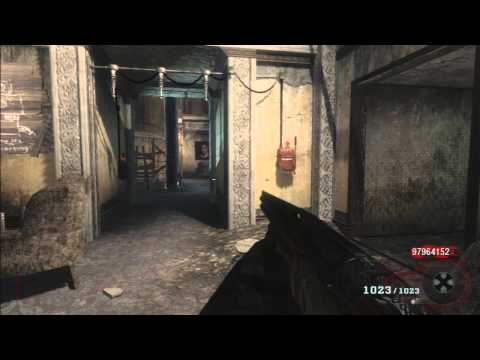
Is account boosting safe on PS5 is the first question every sensible player asks before paying anyone to level a Call of Duty: Black Ops (2010) account, and it is exactly the right question. Handing over a PSN login feels like a big deal because it is one. This guide is the honest version: what a hand-done Black Ops 1 boost genuinely requires from you, how a legit service should handle your credentials, why changing your password afterward is completely fine, and why a real human grinding on your own account is safer than a pre-made "recovery" account or a modded lobby. No hype, no "100% safe" promises — just the mechanics and the trade-offs so you can decide.
What a hand-done boost actually needs from you
A hand-done boost is straightforward: a real person signs into your PlayStation account and plays legit public multiplayer matches on it until the rank, prestige, or unlock target you paid for is reached. Because of how that works, the only thing it needs is temporary access to your account — your PSN email and password, and a way to clear the two-factor prompt if you have 2FA enabled. That is it. No app to install, no "unlock tool" to run, no file to upload to your PS4 or PS5 save. The booster is doing the same thing you would do on the couch, just for more hours than you have.
Compare that to the alternatives that constantly get people banned. Mod menus, save editors, and third-party "unlock" software all inject or edit data that never existed in normal play, and that abnormal data is precisely what anti-cheat and stat systems are built to catch. A hand-done boost produces a completely ordinary progression curve because it is ordinary progression — matches played, XP earned, challenges completed in the intended order.
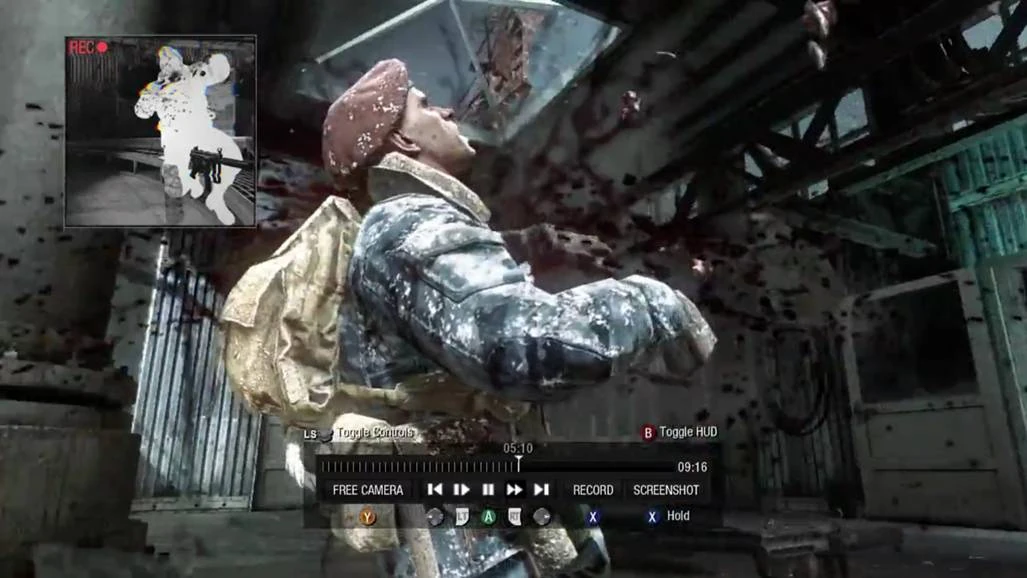
The image above shows Black Ops 1 multiplayer in action, and that is literally the entire "method": standard team deathmatch, domination, and objective modes played on your account. Nothing exotic is happening under the hood, which is the whole point of choosing hand-done over a tool.
How your PSN credentials should be handled
Access is not the same thing as ownership. When you use a legit service, you are lending a login for a window of time, not signing your account away. A trustworthy operator should be able to tell you plainly: who signs in, that no software touches your console or PC, that your details are not stored long-term, and that the account is handed straight back when the order is done. If someone dodges those questions, that is your answer.
A few practical habits protect you regardless of who you trust:
- Use a unique password before the order, ideally one you do not reuse anywhere else, so the credential you share only ever unlocks this one account.
- Turn off anything payment-related you can — a booster never needs your wallet, and your saved cards live behind account management you are not asking them to enter.
- Confirm the 2FA method up front so you are not surprised by a code request mid-order.
- Change your password the moment the boost is finished. This is the single most powerful thing you can do, and it deserves its own section.
Why "change your password after" makes credential-sharing low-stakes
Here is the part that quietly resolves most of the fear. A password is a revocable key, not a tattoo. Once your boost is complete, you change your PSN password, and the credential the booster used stops working instantly. If you had shared 2FA access, resetting the password and reviewing your trusted devices closes that door too. The access you granted was always temporary by design, and you are the one who ends it.
This is why a hand-done boost on your own account is structurally different from schemes that require you to permanently give something up. You keep the account, the rank, the prestige, the CoD Points, and the unlocks. The service rented a few hours of playtime; you own the result forever. Contrast that with a pre-made account, where the "asset" is a login that someone else created, may have created for many buyers, and can reclaim at any time — there is no password change that makes an account you don't truly own yours.
Why hand-done beats a pre-made or "recovery" account
The pre-made account pitch sounds convenient: skip the login-sharing entirely, just buy a maxed profile. The problems are ownership and history. A "recovery" account is one the seller controls and "recovers" to you — meaning they retain the original email and can pull it back, resell it, or lose it to a chargeback dispute. You inherit whatever that account has done, including any prior terms-of-service strikes you cannot see. Your real PSN — your friends, your trophies, your purchases, your other games — is a separate, unbootable island.
With a hand-done boost, the progress lands on the account you already live on. Everything is unified, and the only thing that ever left your control was a password you then changed. For a game as long as Black Ops 1 — where a single prestige is roughly 1,262,500 XP and reaching the 15th prestige is on the order of 18.9 million cumulative XP and hundreds of hours — the appeal of outsourcing the grind is obvious. The safe way to outsource it is to have a human do it on the account that's genuinely yours.
The one honest caveat: is BO1 account sharing bannable?
Time for the part most sellers skip. Account sharing itself is a gray area in Sony's and Activision's terms — technically PlayStation accounts are meant for the account holder, so lending your login is not something the platforms formally endorse. In practice, the thing that actually triggers enforcement is not "a second person played on your account for an afternoon." It is cheating, modding, and manipulated data.
Activision's enforcement for exploits and third-party tools is severe and often lands on the first offense: permanent online bans, stat and emblem resets, and reports forwarded to Sony. So the real risk lever is not who is holding the controller — it is what they do. A human playing clean public matches presents nothing abnormal for anti-cheat to flag. A mod menu or save editor presents exactly what those systems are designed to nuke. That distinction is the entire safety argument, and it is why we will never write a how-to for the tool-based route.

That is the 2010 Call of Duty: Black Ops cover art above — the game whose reputation you are protecting. It has aged into a genuinely renewed audience, which brings us to why this matters more in 2026 than it did years ago.
Why this is timely: the negative-XP mess of mid-2026
On July 9, 2026, Black Ops 1 and Black Ops 2 got native PlayStation Store ports for PS4 and PS5, developed by Iron Galaxy. They are PS4 builds that run on PS5 through backwards compatibility, priced at $39.99 each with a 50% PS Plus discount running until roughly August 6, 2026. New store, fresh servers, and a rush of returning players — and, inevitably, a fresh wave of cheating.
Within days, a genuine exploit hit multiplayer: cheaters uploaded modified PS4 save files to force negative XP in lobbies. Players who simply killed those cheaters had their own XP driven below Level 1 and got locked out of multiplayer. It was confirmed across outlets including Vice, TechTimes, GamesRadar, and MP1st. Activision and Iron Galaxy responded by resetting affected players to Level 20, capping XP in exploit lobbies to around 500 per game, adjusting or disabling playlists, and pushing server-side fixes.
The takeaway for anyone weighing a boost: the damage came from edited save data, the exact category of manipulation a hand-done boost never touches. If you want progress on the new PS5 port without ever going near the mechanism that broke other people's accounts, a human playing legit matches is the answer. You can dig into the specifics on our Black Ops 1 hub.
Comparing the three routes side by side
Not every "boost" is the same product. The table below lines up the three common paths against the questions that actually determine your safety: does it need your login, do you end up owning the account, and what is the realistic ban exposure.
| Route | Needs your PSN login? | Do you own the account after? | Software installed? | Ban risk |
|---|---|---|---|---|
| Hand-done boost (real human, your account) | Yes, temporarily — change password after | Yes — it was always yours | None | Low: legit public matches, no abnormal data |
| Pre-made / "recovery" account | No | No — seller keeps the original email | None | Variable: inherit unknown history; seller can reclaim |
| Modded lobby / save editor / unlock tool | Sometimes, plus tool access | Yes, but at risk | Yes — the actual ban/malware vector | High: permanent ban, stat reset, report to Sony |
A short pre-boost checklist for PS5 owners
If you decide a hand-done boost is right for you, run through this before you share anything:
- Set a unique password you don't use elsewhere.
- Confirm exactly what the service needs — it should be login access only, nothing more.
- Ask directly whether any software runs on your account. The right answer is "none."
- Agree on the target — a rank, a prestige, a Gold camo on a specific weapon (purchasable only at 14th Prestige in BO1, remember), or a Zombies high-round carry.
- Change your password the moment you're notified the order is complete, and glance at your trusted devices.
On delivery: a reputable service will tell you turnaround is typically fast — often within about a day for smaller targets — but nobody honest promises a hard deadline for hundreds of hours of Black Ops 1 grinding. Check the product page for the current, specific estimate on whatever you're ordering.
Frequently Asked Questions
Is account boosting safe on PS5 if I just change my password after?
Changing your password afterward is the key safety step and it makes credential-sharing genuinely low-stakes, because it instantly revokes the temporary access you granted. The bigger safety factor is the method: a hand-done boost plays legit public matches on your account with no software installed, so there is nothing abnormal for anti-cheat to detect. There is no blanket "100% safe" in gaming, but this is the low-risk route.
Is BO1 account sharing bannable by itself?
Account sharing is a gray area — PlayStation accounts are officially meant for the holder — but the enforcement trigger in practice is cheating and manipulated data, not who is holding the controller. Activision issues permanent bans, stat resets, and Sony reports for mods, save editing, and unlock tools, often on the first offense. A human playing clean matches presents none of that.
Why not just buy a pre-made maxed account instead of sharing my login?
Because you never truly own a "recovery" account — the seller keeps the original email and can reclaim or resell it, and you inherit whatever hidden terms-of-service history it carries. A hand-done boost lands the progress on the account you already own alongside your friends, trophies, and purchases, and the only thing you ever shared was a password you then changed.
Does a boost put me at risk from the 2026 negative-XP exploit?
No — that exploit came from cheaters uploading modified PS4 save files, which is exactly the kind of edited data a hand-done boost never touches. Activision and Iron Galaxy have been resetting affected players to Level 20 and pushing server-side fixes. Choosing a human playing legit matches is the way to progress on the new PS5 port without going near the mechanism that broke other accounts. See our Black Ops 1 hub for the current status.