
Jungle is the role where the first ninety seconds of a game can decide the next ten minutes. Pathing is simply the order in which you clear your camps and the decisions you make between them, and doing it well turns the jungle from a chaotic mess into a repeatable routine. This guide explains how to build a clear, how to time your first gank or invade, and how to keep your pathing flexible when the enemy jungler has other plans.
The timings and camp concepts below were checked against the League of Legends Wiki, Riot's support material, and community guides on Mobalytics and r/summonerschool in October 2026. Monster health, respawn timers, and buff durations are tuned by patch, so verify exact numbers in a practice tool; the decision-making framework is what carries between patches.
What a clear actually is
A jungle clear is the sequence of camps you kill from the moment you leave base. The jungle is split between two buff camps that grant a mana or combat buff and a sustain or utility buff, plus several lesser camps and the large neutral objectives. A full clear kills every camp on your side; a partial clear kills a few before you gank or move to an objective. Which camps you start on depends on your champion, your team's needs, and where you expect to be useful first.
Different champions also simply want different routes, and forcing a one-size-fits-all clear onto a champion it does not suit is a common mistake. Learn the clear your specific champion is built for, whether that is a fast full clear, a healthy sustain-focused route, or an early three-camp gank setup, and treat that as your default. From there, you deviate based on the game in front of you rather than starting from a route that fights your own kit.
The most important idea is that pathing is a plan, not a habit. Good junglers decide before the minions spawn where they intend to be at three minutes, and they work backward from that. If you want to gank a lane that pushes early, you path so you arrive just as that lane is overextended. If you want to contest the first major objective, you path so your clear finishes near it with resources to spare.
Thinking about pathing as a plan also means deciding which side of the map you will prioritize before the game begins. Your team composition, the lanes that look gankable, and the first major objective all point toward one side of the jungle. Starting on the side that leads into your intended play keeps your clear efficient, because you arrive where you want to be with camps freshly cleared behind you rather than doubling back and wasting precious early seconds.
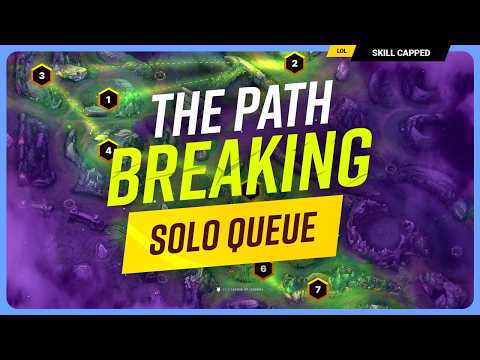
Full clear versus early gank
There are two broad opening philosophies. A full clear maximizes experience and gold, keeps you safe, and gets you to your level spikes faster, at the cost of early lane pressure. An early gank sacrifices some farm to create a kill or a summoner-spell advantage for a lane, which can snowball if it lands but leaves you behind if it whiffs. Neither is universally correct; the right choice depends on your champion and the game state.
Champions with strong, fast clears and powerful level spikes often prefer to full clear and then look for a play around their first back. Champions with strong early ganking kits, long crowd control or fast gap-closers, often path toward a gankable lane early. Read your own champion honestly. If your ganks before level six rarely do anything, you are better off farming efficiently and ganking when you actually have the tools.
It also helps to be honest about your clear speed relative to the enemy. If your champion clears slowly, racing to gank early often just puts you behind on farm and experience without a guaranteed payoff. If your champion clears quickly and healthily, you can afford to deviate for a gank and still catch up. Matching your tempo to your champion's actual strengths, rather than to what you wish it could do, is what keeps your early game from falling apart.
Reading the enemy jungler
Half of good pathing is tracking the other jungler. If you see the enemy jungler top-side at a certain time, you can infer where they started and where they cannot be. That information lets you make aggressive plays on the opposite side of the map with far less risk. Pay attention to which lanes get early pressure, where wards reveal movement, and when enemy laners suddenly play cautiously, which often signals their jungler is nearby.
When you lose track of the enemy jungler, play the percentages. Ward the side of the map where a gank would hurt most, tell your laners to respect the unknown, and avoid overextending into the fog without vision. A missing jungler is a threat until proven otherwise. Developing this habit early is one of the fastest ways to stop dying to ganks you never saw coming, a theme we expand on in our warding guide.
Tracking does not require perfect information; it requires good guesses that you update constantly. Every time the enemy jungler appears on the map, note the time and location and mentally reset their likely position. Combine that with knowledge of which camps respawn and when, and you can often predict where they will be next. Share that read with your team through pings so your laners play safely or aggressively with the same information you have.

Pathing around objectives
The neutral objectives, the dragons and the large pit monsters, are the gravitational center of jungle pathing in the mid game. Smart junglers time their clears so they have camps up near an objective as it spawns, giving them the gold and health to fight for it. This is where pathing stops being about your own farm and starts being about setting up the whole team.
Before an objective spawns, you want vision around it, your laners nearby or able to rotate, and ideally a wave crashing so your allies can join. Pathing toward the objective side a little early, clearing the camps there, and establishing vision is far stronger than showing up empty-handed the moment it appears. If your team cannot contest, pathing to the opposite side to take farm or a trade elsewhere is better than dying for an objective you were never going to win.
Objective setups are also where the jungler earns the trust of the team. Arriving early, placing vision, and pinging intentions tells your laners to start preparing rather than reacting at the last second. A jungler who repeatedly shows up to objectives with a plan, and who concedes gracefully when the numbers do not favor a fight, quickly becomes the player the team follows. That coordination, more than any single clever route, is what converts jungle pressure into won games.
Staying flexible when the plan breaks
No clear survives contact with a competent enemy. If you get invaded, a lane feeds, or the enemy jungler appears where you did not expect, you have to adapt. The skill is recognizing quickly that the original plan is dead and choosing the best new one rather than stubbornly finishing a clear that no longer makes sense. Sometimes that means giving up a camp to answer a gank elsewhere; sometimes it means farming safely and conceding tempo to reset.
Adapting well also means knowing when to counter-jungle. If you can read that the enemy jungler is on the opposite side of the map, stealing their camps denies them gold and experience while padding your own, and it often baits them into a bad reaction. This is a riskier play that depends on vision and on knowing where the enemy is, but when the information supports it, taking the enemy's resources is one of the strongest things a jungler can do.
Track your own resources too. There is no point arriving at a gank with no health and no summoner spells. Efficient junglers manage their health through their sustain tools, recall at the right moments to buy power spikes, and return to the map with a plan rather than wandering. Flexibility built on good fundamentals beats a rigid memorized route every time.
The best way to internalize all of this is to review your own early games. Watch where you were at three and six minutes, whether your ganks accomplished anything, and whether you reacted to the enemy jungler or got surprised by them. Over time you will build a library of situations and the right response to each, and your pathing will shift from a memorized script to genuine, flexible decision-making that holds up against opponents who refuse to cooperate.
Keep climbing with stronger map play
Jungle pathing is really map awareness applied to one role, and it pairs naturally with the rest of your macro game. For the bigger picture of rotations, waves, and tempo, read our macro guide, and to stop dying to the ganks you are learning to make, read our warding guide. If you want to climb faster or try the role on a fresh account, our League of Legends accounts and boosting services are run by real players who path for a living.
Frequently Asked Questions
Should I always full clear?
No. Full clearing maximizes farm and gets you to level spikes, but champions with strong early ganks or a lane begging for help are often better served by an early gank. Match the plan to your champion.
How do I track the enemy jungler?
Note where they show on the map, which lanes get early pressure, and where wards reveal them. From one sighting you can often infer where they started and where they cannot be.
Which camps should I start on?
Start on the side where you plan to be useful first, whether that is a gankable lane, an objective, or an invade. Decide your three-minute goal before minions spawn and path backward.
What do I do when I lose track of the enemy jungler?
Play the percentages: ward the dangerous side, tell laners to respect the unknown, and avoid pushing into fog without vision. A missing jungler is a threat until proven otherwise.
How do I path around dragons and objectives?
Time your clear so you have camps up near the objective as it spawns, establish vision early, and bring your team. Showing up with resources beats arriving empty-handed.
What if my clear gets interrupted?
Adapt. Recognize quickly that the original plan is dead and pick the best new one rather than finishing a route that no longer makes sense. Manage your health and summoners so you arrive useful.