
Premier is Counter-Strike 2's flagship competitive mode, and it is the one most players mean when they talk about their rank. It replaces the per-map skill-group badges of classic Competitive with a single numeric CS Rating and adds a pick/ban map veto before each match, bringing matchmaking closer to how organized Counter-Strike is actually played. This guide explains how Premier works, how CS Rating moves, and how the mode differs from classic Competitive.
The Premier details here were checked in October 2026 against Valve's Counter-Strike site, Liquipedia's documentation of the mode, and community discussion on r/GlobalOffensive. Valve periodically adjusts matchmaking and runs new seasons, so treat specific figures as approximate and confirm the current season's details in-game.
CS Rating: a single number
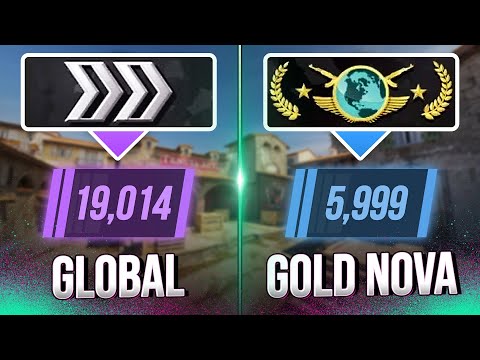
The headline feature of Premier is CS Rating, a single numeric skill value that applies across all maps rather than a separate badge per map. Winning raises your rating and losing lowers it, with the size of the change influenced by the result and the relative strength of the two teams — beating stronger opponents moves you more than beating weaker ones. Because it is one pooled number, CS Rating is a cleaner overall measure of skill than the old per-map groups, and it is easy to track your progress over a season.
Ratings are also grouped into colored tiers for display, so a given range of CS Rating corresponds to a color band that gives a quick sense of where you sit. The exact boundaries can shift as Valve tunes the system, so the number itself is the thing to watch rather than memorizing where a band begins.
A single pooled number has a real advantage over per-map badges for understanding where you stand: it cannot be gamed by only playing your one best map. Because CS Rating draws from all of your Premier play, it reflects your overall ability rather than how polished you are on a single layout, which makes it a more honest benchmark and a better signal for matchmaking to pair you fairly. It also gives you one clean figure to track across a season, so progress or stagnation is obvious at a glance instead of being spread across several separate badges that each move at their own pace. For players who are motivated by measurable improvement, that clarity is a big part of why Premier feels more serious than casual queues.
The pick/ban map veto
Before a Premier match begins, both teams go through a map veto — a sequence of banning and sometimes picking maps from the active pool until one map remains. This is the same structure used in organized and professional play, and it is one of the biggest differences from classic Competitive, where you simply queue for a specific map. The veto means you should have an opinion about the map pool: knowing which maps your team is comfortable on, and which to ban, becomes part of the game before a single shot is fired.
Practically, this rewards players who learn more than one map well. If you only know a single map, your bans and picks are weak, and you can be forced onto a map you dislike. Broadening your map pool is one of the ways Premier pushes players to improve beyond raw aim.
The veto also adds a small layer of strategy before the match even starts. When you play as a group, you can coordinate your bans to steer toward maps your team is collectively strong on and away from ones a likely opponent favors. Even solo, paying attention to the veto — banning the map you are weakest on first, for instance — gives you some control over the game you are about to play rather than leaving it to chance. Over a season this matters, because being comfortable on a wider slice of the map pool means fewer games where you start at a disadvantage simply because of which map survived the veto. Treat learning a second and third map as a genuine rank investment, not an optional extra.
Seasons and placement
Premier runs in seasons. At the start of a season, or when you first play Premier, you complete a set of placement matches that establish your initial CS Rating. After placement, your rating moves match to match for the rest of the season. When a new season begins, ratings are typically reset or recalibrated so everyone re-establishes their standing, which keeps the ladder fresh and gives returning players a clean start. Because the exact placement and reset behavior can change between seasons, check the current season's rules in-game rather than assuming they match a previous one. The placement games are worth taking seriously, since they set the starting point you spend the rest of the season moving from, but they are not worth stressing over either — a season is long, and a shaky placement can be climbed out of with consistent play. Treat placement as a rough first estimate the system makes of you, not a verdict.
The seasonal structure also means there is a natural rhythm to Premier: a push at the start to place well, a long middle of grinding your rating, and the satisfaction of a final standing when the season closes. For players motivated by a visible number to chase, this is a big part of Premier's appeal — and the habits in our ranking up guide apply directly to climbing it.

Premier versus classic Competitive
Classic Competitive still exists and uses the familiar tiered skill-group badges tracked separately for each map. The differences are worth understanding so you pick the right mode for your goals:
- Rank format — Premier gives one CS Rating number across all maps; Competitive gives a per-map badge, so you can be a high rank on one map and low on another.
- Map selection — Premier uses the pick/ban veto; Competitive lets you queue directly for a chosen map.
- Feel — Premier is closer to organized play and is where most serious players focus, while Competitive is a more casual way to play a specific map you enjoy.
Neither is better in the abstract. If you want a single rating that reflects your overall skill and a more structured experience, Premier is the mode. If you just want to play one favorite map without a veto, Competitive is fine.
A reasonable way to use both is to treat Competitive as a lower-stakes place to learn a new map and Premier as where you test yourself for real. When you want to add a map to your pool, grinding it in Competitive lets you make mistakes and learn the callouts, timings, and common positions without those mistakes dragging down the CS Rating you care about. Once the map feels comfortable, you bring it into your Premier veto as a map you are willing to play rather than one you have to ban. Used this way, the two modes complement each other instead of competing, and the per-map structure of Competitive becomes a training ground that feeds directly into your Premier results.
Playing Premier well
Succeeding in Premier combines everything this site covers: a stable setup so your aim is consistent, round-focused play rather than scoreboard chasing, team economy discipline, and a broad enough map pool to make the veto work for you. Because the mode is built around a single visible number, it also rewards patience — your rating will swing, and judging your progress over many matches rather than a single bad night is the healthier approach. A clean configuration helps you show up calibrated; our best settings guide covers the baseline.
It is also worth protecting your own mindset in a mode built around a visible score. Watching a number tick down after a loss can tempt you into chasing it — queuing again immediately while tilted, forcing aggressive plays to "win it back," or blaming teammates instead of reviewing your own round. All of those make the number fall faster. The players who climb in Premier treat the rating as a long-term trend to nudge upward over a season, not a scoreboard to react to game by game. Take a break after a rough streak, review a demo instead of re-queuing on tilt, and remember that a rating that swings in both directions is behaving exactly as designed. Steady habits beat frantic grinding every time, and Premier's season structure gives you plenty of room to recover a bad start.
Counter-Strike 2 accounts and services
Premier is built around Prime accounts, and sometimes the obstacle to playing it seriously is the account itself — needing Prime, or a rating that reflects your real level rather than a placement that went badly. If that is where you are, our Counter-Strike 2 accounts and services page offers accounts and boosting as a service so you can enter Premier on the right footing. It is a genuine service, not a cheat, and the habits in these guides are what keep you climbing once you are in.
Frequently Asked Questions
What is CS Rating in Premier mode?
A single numeric skill value that applies across all maps. It rises when you win and falls when you lose, with the change influenced by the result and the strength of the opposing team.
How is Premier different from classic Competitive?
Premier uses one CS Rating across all maps and a pick/ban veto before each match. Competitive uses a per-map skill-group badge and lets you queue directly for a specific map.
What is the map veto?
Before a Premier match, both teams ban and pick maps from the active pool until one remains. It mirrors organized play and rewards knowing more than one map so your bans and picks carry weight.
Does CS Rating reset each season?
Ratings are typically reset or recalibrated at the start of a new season, with placement matches to re-establish your standing. Exact behavior can change between seasons, so check the current rules in-game.
Do I need Prime to play Premier?
Premier is built around Prime accounts, so serious play happens on Prime-enabled profiles. If you want to compete in Premier meaningfully, a Prime account is effectively required.
Which mode should I play to improve?
Premier, if you want a single rating that reflects overall skill and a structure close to organized play. It pushes you to learn multiple maps and play for rounds, which builds well-rounded skill.