
Borderlands 4 is a looter-shooter, so your guns matter more than almost anything else you equip. But "best gun" changes with your character, your element, and even the specific enemies in front of you. This guide focuses on the manufacturers and weapon types that consistently perform, and how the new parts system changes what you should chase.
Manufacturer behavior and weapon-type notes below were cross-referenced with Fextralife, PC Gamer and community loot discussion on the Borderlands subreddit, checked in October 2026. Because live games get balance passes, treat specific numbers as subject to change and focus on the behaviors, which are stable.
Manufacturers set the personality of a gun
Every weapon in Borderlands carries its manufacturer's identity, and learning those identities is the single most useful thing you can do. The returning staples behave much as fans expect:
- Jakobs: high raw damage, hard-hitting crits, no elements on most pieces. Rewards accuracy.
- Maliwan: elemental specialists with charge-up mechanics; the go-to for status damage.
- Torgue: explosive, splash-heavy, loud. Big damage with a learning curve.
- Vladof: high fire rate and huge magazines, often with underbarrel attachments.
- Tediore: you throw the gun to reload, and it explodes or does something odd.
- Dahl: controllable, versatile, with burst-fire aim modes.
Borderlands 4 also leans hard into mixing those identities, which brings us to the real change this entry made.

Licensed parts are the big new idea
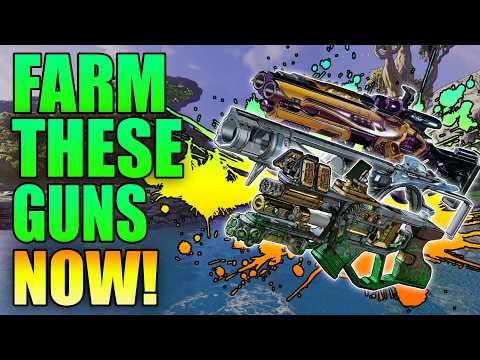
The defining weapon feature in Borderlands 4 is that guns can carry licensed parts from a second manufacturer, so a single weapon might fire like one brand but reload or add an effect from another. In practice this means the loot pool is wider and weirder than before, and a "good" gun is often a lucky marriage of two manufacturers that complements your build. When you inspect a weapon, read its parts, not just its red flavor text, to understand what it will actually do in your hands.
Weapon types that carry most builds
Across characters, a few categories reliably pull their weight. Assault rifles and SMGs give you consistent, element-friendly damage for clearing groups. Shotguns remain king for close-range burst, especially on durable melee characters. Sniper rifles, particularly from Jakobs, reward crit-focused players with enormous single-shot damage. Pistols are surprisingly strong in this game and double as a dependable backup. Rocket launchers and other heavies are situational, but a good one is a lifesaver against armored targets and bosses.
Match the element, not just the number
Damage number on the card is only half the story. Borderlands rewards bringing the right element: use shock against shields, incendiary against flesh, corrosive against armor, and cryo to slow and set up crits. Carrying a small spread of elements across your four weapon slots will do more for your clear speed than hunting a single marginally higher-damage gun. This is why many players keep a Maliwan elemental weapon alongside a flat-damage Jakobs piece.
Element matching is not only about raw damage; it also controls crowd behavior. Shock and corrosive strip the defensive layers that make enemies frustrating, while cryo slows a dangerous rusher long enough for you to line up a crit, and incendiary chews through the health bars of unarmored foes. Carrying answers to each enemy type means you dictate the pace of a fight instead of reacting to it, and that control often does more for your clear speed than a marginal increase on a single weapon's damage card.
Where the best guns come from
The strongest weapons are legendaries with unique effects, and those come from named bosses, dedicated farm targets, and world drops. If you want a focused list of the standout legendaries and where to farm them, read our companion guide to the best legendary weapons in Borderlands 4. And because raw firepower is only as good as what keeps you alive, pair your arsenal with the right defensive layer, covered in our Borderlands 4 best shield breakdown.
Rarity, parts and the anatomy of a drop
Understanding how a weapon is put together makes you a much better judge of loot. Every gun has a rarity, shown by its color, that broadly indicates its potential, but within that rarity the individual parts decide its real performance. Two weapons of the same name and color can have different barrels, grips, magazines and accessories, each nudging accuracy, handling, fire rate or capacity. The licensed-parts system layers a second manufacturer's traits on top, so a drop is less a fixed item than a bundle of randomized choices. When you pick up a promising weapon, resist the urge to judge it by color alone and instead read what it is actually made of.
This is why the familiar advice to chase legendaries is incomplete. A legendary guarantees a unique effect, but a poorly rolled legendary with the wrong element or clumsy handling can lose to a well-rolled purple that happens to suit your build. The habit that separates experienced players is inspecting rather than assuming: open the item card, check the element, scan the parts, and ask whether this specific copy improves your loadout. Over hundreds of drops that discipline saves you from selling hidden gems and from clinging to legendaries that only look good on paper.
Flavor text, the red line on many special weapons, is a useful shorthand once you learn it, because it hints at the unique effect without spelling out every number. But it is a starting point, not the whole story; the effect still interacts with your skills, your element coverage, and the enemy in front of you. Treat red text as a flag that a weapon does something special, then test whether that something actually helps you. The guns that end up in your permanent loadout are the ones that survive that test in real fights, not the ones with the flashiest description.
Build four slots that cover each other
A strong arsenal is not four copies of the same idea; it is four weapons that cover each other's weaknesses. A practical template is one high-damage single-target weapon for bosses and tough enemies, one fast-firing weapon for clearing crowds, one dedicated element-swap weapon to counter whatever your main guns lack, and one flexible pick that suits the moment. Filling those roles means you are never caught with the wrong tool, which matters far more in tense fights than squeezing out a slightly higher damage number on a single slot.
Ammo economy quietly shapes this too. Running four weapons from the same ammo pool will leave you dry in a long fight, so spreading your slots across ammo types keeps you firing. Pay attention to which ammo your heaviest hitters drain, and keep a backup that uses a different pool for those moments when your main runs out mid-boss. Managing ammo well is an underrated skill that separates smooth players from ones who keep sprinting back to a vending machine.
Handling, accuracy and fire rate are not footnotes
The damage number on a weapon card hides how a gun actually feels. A rifle with a huge listed figure is useless if its recoil throws your shots off a distant crit spot, while a lower-number gun you can keep on target may out-damage it in practice. Read the secondary stats, accuracy, handling, reload speed and magazine size, and test a weapon on real enemies before you judge it. Jakobs snipers reward steady aim, Vladof guns forgive spray with huge magazines, and Dahl's burst modes help you stay accurate under pressure. The best gun for you is the one whose rhythm matches your reflexes.
Fire rate interacts with your build, as well. Many skill trees grant on-hit or on-crit effects, and a fast-firing weapon triggers those far more often than a slow, hard-hitting one. If your character's power comes from stacking a buff with every hit, a rapid SMG may out-perform a higher-damage rifle simply because it feeds your passives faster. This is why gun choice cannot be separated from your skill tree, a relationship our skill tree guide covers in detail.
Keep testing as you level
Weapons scale to the level you acquire them, so a favorite gun from twenty levels ago will quietly fall behind even if its effect is still great. Get into the habit of refarming your key weapons as you climb, and of inspecting every drop rather than auto-selling by rarity. The parts system means a boring-looking weapon can hide a perfect roll, and the only way to know is to read it. Treat your loadout as a living thing you revise every few levels, not a shrine you build once and never touch.
If you want a strong loadout without the farm
The legitimate path is the fun part for most players: farm your preferred bosses, redeem SHiFT golden keys for a chance at high-tier gear, and slowly refine your four slots. There is no substitute for finding your own god-roll.
If you simply want to skip the grind and start experimenting with a capable kit, the store offers a curated Borderlands 4 must-have weapons and gear package delivered to your account. It is items delivered to you, not a cheat you run, and you still need to own the game. The full lineup is on the Borderlands 4 page.
Frequently Asked Questions
What is the best gun manufacturer in Borderlands 4?
There is no single best manufacturer; each has a role. Jakobs for raw crit damage, Maliwan for elements, Torgue for splash, Vladof for sustained fire. The best choice depends on your build and the enemy in front of you.
What are licensed parts?
Licensed parts let a weapon carry traits from a second manufacturer, so one gun can combine, for example, one brand's firing behavior with another's reload effect. Always inspect a weapon's parts to understand how it will actually perform.
Which element should I use?
Shock strips shields, corrosive eats armor, incendiary burns flesh, and cryo slows enemies and boosts follow-up crits. Carry a spread of elements rather than relying on one.
Do I need legendaries to do well?
Not for the campaign, where good purples are plenty. Legendaries matter most at endgame, where their unique effects enable the strongest builds.
How do I get better guns quickly?
Farm named bosses, redeem SHiFT golden keys for the vault reward, and keep an eye on dedicated loot sources documented by the community. Selling off duplicates also funds more farming.
Are higher-rarity guns always better?
No. A well-rolled purple with the right element and parts can outperform a poorly rolled legendary for your build. Read the parts and match the element before assuming rarity wins.