
Ace Combat 8 is one of the most anticipated flight-action announcements in years, but Bandai Namco has shared very little about how it actually plays. The good news is that the series has a remarkably consistent design DNA, so you can prepare by understanding what Ace Combat games have always done well. This article walks through the core gameplay loop, the kinds of missions you fly, how weapons work, and how difficulty is tuned, while being clear about which details are expected rather than confirmed.
For this article I leaned on the long-established conventions of the Ace Combat series as documented on the Ace Combat Fandom wiki, Bandai Namco's official Ace Combat channels, and coverage from IGN, GameRant and PC Gamer, along with discussion in the r/acecombat community, all checked in October 2026. Because Ace Combat 8 is newly announced and concrete details remain limited and unconfirmed, anything specific to AC8 is clearly marked as expected rather than stated as fact.
The arcade flight-combat loop
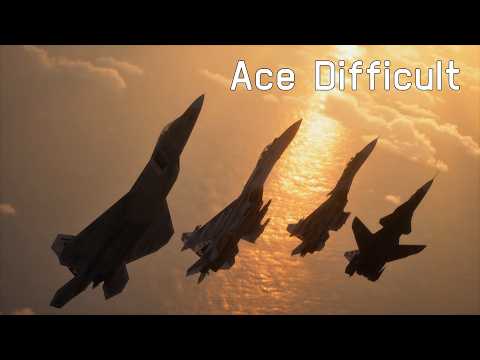
Ace Combat is not a hardcore flight simulator and never has been. It sits in a sweet spot the series calls "arcade" combat flight: aircraft feel fast and responsive, you can pull aggressive turns without constantly managing stalls, and the camera and targeting systems are designed to keep the action readable at high speed. You pick an aircraft, load it with weapons, and fly sorties against enemy aircraft, ground targets, ships and air defenses. The minute-to-minute experience is about managing energy and positioning: climbing to trade altitude for speed, diving to build momentum, and timing your turns so you arrive behind a target rather than overshooting it.
Across the series you control throttle, pitch, roll and yaw, with a brake and an afterburner that are central to every engagement. Most games offer two control schemes, usually labelled Standard and Expert (sometimes Novice and Expert), where the simpler scheme keeps the plane more stable and the advanced scheme gives you finer, more realistic control of the airframe. If AC8 follows the pattern, newcomers will be able to jump in on the assisted scheme and still feel competent within a mission or two, while veterans switch to the advanced scheme for the extra authority it gives in a knife fight. Treat the exact control labels for AC8 as unconfirmed until Bandai Namco shows gameplay.
What keeps the loop compelling is readability. The series layers a clear HUD, a lock-on reticle, a radar and target markers on top of fast action so that even a chaotic furball stays legible. You are constantly reading three things at once: where your current target is, what is threatening you from behind, and how much energy you have to spend on the next maneuver. Learning to parse that at a glance is the skill that separates a frustrating early session from the effortless flow the series is famous for, and it is a skill that transfers cleanly from one Ace Combat to the next.
Weapons: the gun, standard missiles and the special slot
The series weapon layout has been stable for a long time, so it is a safe foundation for expectations. You typically carry a machine gun or cannon for close work, a large stock of standard short-to-medium range missiles as your bread-and-butter air-to-air and air-to-ground tool, and one "special weapon" slot that you choose before a mission. That special slot is where the variety lives, and if AC8 keeps the convention you can expect options along the lines of long-range missiles, multi-lock missiles that hit several targets at once, high-maneuverability missiles for dogfighting, and unguided bombs or rockets for heavy ground work. Specific weapon names and stats for AC8 are not confirmed, so verify them in-game when the game ships.
Good play is less about spamming missiles and more about lock discipline. Standard missiles have a lock range and reliability that drops against hard-turning targets, so experienced pilots close the distance, line up behind the enemy, wait for a solid lock tone, and fire in pairs. The gun rewards leading your target and is often the fastest way to finish a damaged aircraft or to deal with something nimble that keeps dodging your missiles. Because your special weapon has limited ammunition, a big part of mastery is deciding which targets truly deserve it and cleaning up everything else with standard missiles and cannon fire.
The series also commonly layers aircraft customization on top of raw loadouts. Past entries have let you fit parts or tuning options that nudge a plane toward air-to-air or air-to-ground, trade some agility for durability, or improve a specific weapon's behavior. If AC8 includes something similar, two players flying the same airframe could have meaningfully different experiences based on how they tune it. Consider any specific parts system for AC8 unconfirmed, but expect some form of personalization, because it has been a long-running part of the formula.
Mission types and objectives

Ace Combat campaigns are built from set-piece missions, each with its own objective, time limit and often a scripted turn partway through. Over the years the series has used a recurring menu of mission shapes: sweeping an area of enemy aircraft, destroying a list of ground or naval targets before a timer expires, escorting or defending a friendly unit, threading through canyons or tunnels, and climactic boss fights against superweapons or ace squadrons. Many missions change state mid-flight, adding new waves or new objectives once you hit a threshold, which keeps the pacing tense and stops any single tactic from carrying you start to finish.
Scoring and target priority matter. Most missions reward you for clearing targets quickly and completely, and higher difficulties push you to be efficient rather than cautious. The TGT markers on your HUD and radar guide you to mission-critical targets, while the broader battlefield is full of optional kills that build your score and, in many entries, your in-game funds for buying new aircraft and parts. A common mistake for newcomers is to fixate on optional targets and run out the clock before completing the actual objective, so reading the briefing and prioritizing the mandatory TGTs first is a habit worth forming early.
The series is also known for its sense of theater. Missions are scored against a backdrop of radio chatter, dynamic music and dramatic events, and the best of them turn a simple objective list into a memorable moment, whether that is a desperate defense or a run through a collapsing structure. Expect AC8 to continue this cinematic structure, but do not assume specific mission names, locations or story beats until they are officially revealed; those are exactly the details the series keeps under wraps before launch.
Difficulty, replay and progression
The series traditionally offers several difficulty tiers, commonly Easy, Normal, Hard and a tougher Ace setting, with the hardest tiers sometimes unlocked after a first clear. Higher difficulty increases enemy aggression, accuracy and durability and tightens your margin for error, so the same mission becomes a very different test. On the top settings, flying straight for even a moment invites a missile, and you have to use terrain, timing and energy far more deliberately. This is where the fundamentals the series teaches really pay off.
Replay is a core part of the loop: you revisit missions to improve your score, earn currency, unlock aircraft and liveries, and clear optional challenges. If AC8 keeps a purchasable aircraft tree, you will likely grind favorite missions to afford the jets you want, then take those jets back into the campaign on a higher difficulty. This gentle loop of earn, buy, and re-challenge is a big part of why Ace Combat campaigns have so much longevity despite being tightly authored rather than open-world.
Because so much of the experience is about mastery and collection, players often want a clean, fully equipped file to experiment with high-end aircraft and loadouts without regrinding the whole currency curve. That is where save-based options come in for single-player, offline enjoyment, letting you focus your limited launch-week time on the flying itself rather than the economy around it.
Common beginner mistakes to avoid
A few habits trip up almost everyone who is new to the series, and knowing them in advance will save you a lot of early frustration. The first is flying straight and level for too long, which turns you into an easy missile target; keep moving, keep rolling, and never give an enemy a stable firing solution on your tail. The second is treating every target as equally important and chasing optional kills while the mission timer drains, instead of clearing the mandatory objectives first and mopping up extras only if time allows.
The third common mistake is leaning on the afterburner constantly. Full throttle feels powerful, but it burns through your energy and sends you overshooting targets you could have killed with a measured approach. Learn to modulate speed with the throttle and brake so you settle behind a target rather than blowing past it. Finally, do not hoard your special weapon so carefully that you finish a mission with full ammo and a string of near-misses; the special exists to solve the hardest targets, so spend it on them and clean up the rest conventionally.
None of these are AC8-specific lessons, which is exactly why they are worth internalizing now. They are the failure modes the series has always punished, and correcting them is the fastest way to go from barely clearing missions to clearing them with a high rank. If you only remember one thing, make it the first point: a plane that keeps moving unpredictably is a plane that is very hard to shoot down.
Getting the most out of Ace Combat 8 on day one
If you want to spend launch week flying the aircraft and loadouts you actually enjoy rather than grinding currency, a tailored single-player file can help. Our Ace Combat 8 modded save is built for your own offline campaign so you can explore high-end jets and special weapons without starting from zero, and if you would rather chase completion the clean way we also offer a guided platinum trophy service. You can see everything we list for the game on the Ace Combat 8 page. If you are still deciding what to fly, our breakdowns of the best aircraft to expect and how to dogfight are good companions to this gameplay overview.
Frequently Asked Questions
Is Ace Combat 8 a realistic flight simulator?
No. Like the rest of the series it is an arcade-style flight-combat game that favors fast, readable action over systems-heavy simulation, though details for AC8 are still unconfirmed.
Will there be assisted controls for beginners?
The series has long offered a simpler and an advanced control scheme, so assisted controls are reasonable to expect, but the exact options for AC8 have not been confirmed.
How do special weapons work?
Each mission you equip one special weapon alongside your gun and standard missiles. The special slot typically offers long-range, multi-lock, high-agility or ground-attack options, with the specifics varying by game.
Can I replay missions to earn aircraft?
In past Ace Combat games yes, replaying missions earns currency and unlocks. AC8 has not confirmed its progression system, but a purchasable aircraft tree would be consistent with the series.
How many difficulty levels are there?
The series usually offers several tiers from Easy up to a demanding Ace setting, with the hardest sometimes unlocked after one clear. AC8 difficulty options are not yet confirmed.
When can I actually play Ace Combat 8?
A release date has not been confirmed. Watch Bandai Namco official channels for the announcement rather than relying on rumors.