
Search for 8 Ball Pool tricks and you will find two very different things. One is a pile of so-called hacks, generators, and aim tools that are all scams. The other is a set of genuine cue skills that separate good players from great ones. This guide ignores the first entirely and focuses on the second: the real tricks, built on spin and geometry, that both impress opponents and actually win frames.
These techniques rest on the physics of the game rather than any exact stat, so they stay stable across updates. I cross-checked the mechanics against Miniclip's support material, the r/8ballpool community, and established community trick-shot and coaching content, all checked in October 2026. Every trick here is performed with the game's standard controls, nothing outside the official app.
Cue ball control is the real trick
Before any flashy shot, understand that the foundation of every trick is controlling the cue ball with spin and speed. The spin selector lets you strike the white above center (follow, or top spin) to make it roll forward after contact, below center (draw, or back spin) to pull it back, and to the sides (English) to send it left or right off a cushion. Mastering where the cue ball ends up is the single skill that unlocks everything else, from simple position to the fanciest escape.
Practice this deliberately. Set up a straight pot and experiment with follow and draw to see how far the white travels forward or back. Then add side spin and watch how it widens or narrows the angle off a cushion. Once you can predict the cue ball's path reliably, the tricks below stop being luck and become repeatable tools. A player who truly controls the white never needs a gimmick, because they can already put the cue ball almost anywhere they want.

The swerve and the curve
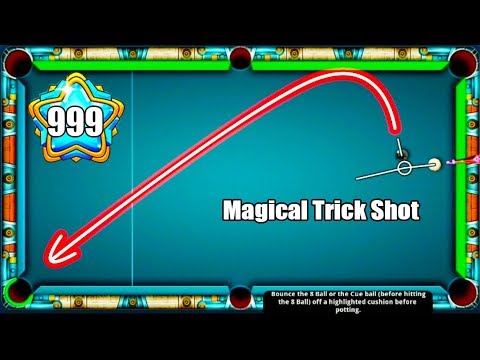
One of the most useful tricks is the swerve, where heavy side spin combined with the right power curves the cue ball's path around an obstructing ball to reach one you could not otherwise hit. This is invaluable for escaping a near-snooker where a direct line to your target is blocked. It takes practice to judge how much the ball curves for a given amount of spin and speed, but once you have the feel, it turns many apparently hopeless positions into legal, even productive, shots.
The curve is subtle and depends heavily on your cue's Spin stat and the power you apply, so it rewards experimentation on low-stakes tables before you rely on it in a real frame. Do not expect to bend the ball dramatically; the effect is real but modest. Used well, it is less a spectacle and more a quiet escape that keeps you in control when your opponent thinks they have you hooked.
The direction of the curve follows the side of the cue ball you strike, so left-hand spin curves the path one way and right-hand spin the other. The amount of bend grows with both the spin you apply and a softer, more deliberate stroke, because a hard shot gives the ball less time to curve before it reaches its target. Judging the combination is the whole skill, and the only way to build it is repetition against a known obstacle until you can predict the arc. It is a specialist tool rather than an everyday shot, but on the handful of occasions a frame comes down to reaching a ball you seemingly cannot hit, a practiced swerve turns a certain foul into a legal escape and sometimes even a pot.
Bank and kick shots
Bank shots, where you pot a ball off one or more cushions, are among the most impressive and the most practical tricks. The core principle is that the angle a ball leaves a cushion mirrors the angle it arrives, so you aim for a point on the rail that reflects the ball into the pocket. The guideline does not always trace the full path of these, so learning to read the mirror angle yourself is what makes them repeatable rather than hopeful.
Kick shots apply the same mirror principle to the cue ball, sending it off a cushion to strike your target when a direct hit is blocked. These are essential for playing legal escapes out of a snooker, because often the only legal way to hit your ball is off a rail. Practicing both bank and kick angles until the mirror geometry is second nature will win you frames that less-studied opponents simply concede by fouling.
A reliable way to visualize the mirror is to imagine the pocket, or the ball you need to strike, reflected to the far side of the cushion as if the rail were a mirror and the table continued beyond it. Aim straight at that imaginary reflected target, and the ball rebounds into the real one. This mental image removes most of the guesswork from banks and kicks, turning them from hopeful swipes into calculated shots. Be aware that pace and any side spin will shift the rebound slightly, so learn the plain mirror angle first with a firm, center-ball hit, and only start adjusting for spin once the basic reflection is second nature.
Draw, follow, and position runs
The trick that wins the most games is not spectacular at all: it is using draw and follow to run the table. After potting a ball, follow spin carries the cue ball forward to the next, while draw pulls it back behind the one you just made. Chaining these so the white always lands on a clean line to your next ball is how skilled players clear an entire group in a single visit. It looks effortless, but it is the product of planning each shot's finishing position.
To build this, start thinking two balls ahead rather than one. Decide not only which ball you want next but which one after that, and choose your spin so the cue ball naturally flows between them. This is the difference between a player who pots one nice ball and then gets stuck, and one who clears the table while barely seeming to try. The trick is foresight, dressed up as touch.
The stun shot deserves a place in this toolkit too, sitting between follow and draw. By striking slightly below center with moderate power, you can make the cue ball stop almost dead at the point of contact, which is invaluable when your next ball sits close to where you are potting and you want the white to go nowhere. Mastering the full range from firm draw, through dead stun, to gentle follow gives you precise control over how far the cue ball travels along its natural path, and that control is what lets you navigate a cluttered table one short, deliberate movement at a time rather than sending the white careening unpredictably.
Why hack tools are always a scam
It needs saying plainly: every "8 Ball Pool hack," extended-guideline mod, auto-aim tool, and coin generator is a scam or a ban risk, with no exceptions. The ones that ask for your login steal your account. The modified clients get you permanently banned by Miniclip's detection. And the generators simply do not work, because coins and cues live on Miniclip's servers, not on your device. There is no secret trick to bypass skill, and anyone selling one is selling you a problem.
The real shortcut, if you want one, is practice and good equipment. Every genuine trick in this guide is learnable in an afternoon of focused play on cheap tables, and none of them put your account at risk. Spend your energy on cue ball control and angles, and you will beat the players chasing hacks every time, because they are usually too busy getting their accounts stolen to actually improve.
It is also worth knowing how these scams typically present themselves, so you can spot them instantly. They promise the impossible, an endless guideline, guaranteed wins, free unlimited coins, and they almost always ask you to either enter your account details on an outside page or install an unofficial version of the game. Both of those requests are the trap. No legitimate tool ever needs your login outside the official app, and no legitimate version of the game comes from anywhere but your device's official store. Treat any offer that ticks those boxes as hostile on sight, and you will sidestep the entire ecosystem of account theft and bans that preys on players looking for a shortcut.
Getting the gear to practice with
Many tricks lean on your cue's Spin stat, and practicing them freely is easier with a comfortable coin balance so a few lost frames on the practice tables do not sting. If you want a head start, the 8 Ball Pool coins and accounts page offers coins and accounts honestly, as a legitimate time-saver and never a hack. The skills themselves still have to be earned at the table. Build on this with our spin guide for the mechanics behind every trick and the how to aim guide to make sure your fundamentals are sound first.
Frequently Asked Questions
What is the most useful trick to learn first?
Cue ball control with draw and follow. Being able to place the white where you want after a pot is the foundation of every other trick and the skill that wins the most frames.
How does the swerve shot work?
Heavy side spin combined with the right power curves the cue ball around an obstructing ball. The effect is modest and depends on your Spin stat, so practice it on low-stakes tables before relying on it.
How do I make bank shots consistently?
Use the mirror principle: the angle a ball leaves a cushion matches the angle it arrives. Aim for the point on the rail that reflects the ball into the pocket, and practice reading that angle yourself.
Are 8 Ball Pool hack tools real?
No. Every hack, auto-aim mod, extended guideline, and coin generator is a scam or a ban risk. They either steal your login, get your account banned, or simply do not work since everything lives on Miniclip's servers.
What is a kick shot used for?
A kick sends the cue ball off a cushion to legally strike your target when a direct hit is blocked. It is essential for escaping snookers without fouling, using the same mirror-angle geometry as a bank.
How do I clear the whole table in one visit?
Plan two balls ahead and use follow and draw so the cue ball always lands on a clean line to your next shot. Running the table is foresight and spin control, not luck.