
Plenty of 8 Ball Pool players lose frames they should have won simply because they did not know a rule. They foul on the break, pot the black at the wrong time, or hand their opponent ball in hand without realizing why. Understanding the rules precisely is one of the cheapest ways to win more, because it costs nothing to learn and immediately stops you gifting frames away. This guide lays out exactly how the game is scored and penalized.
8 Ball Pool follows a standard set of 8-ball rules with the app's own implementation, and I cross-checked the specifics against Miniclip's in-game rules screen and support material, standard WPA-style 8-ball conventions, and the r/8ballpool community, all checked in October 2026. The game's rules screen is always the final authority on your version, so when in doubt, check it in-app, since Miniclip can tweak edge cases.
The object of the game
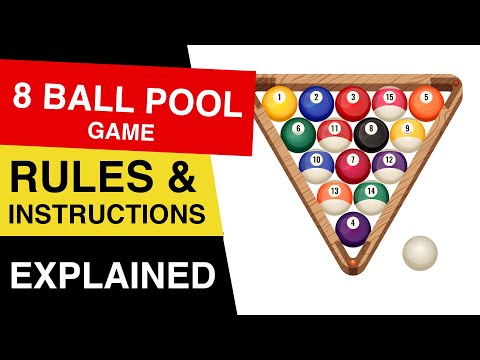
8 Ball Pool is played with a cue ball, seven solid balls, seven striped balls, and the black 8 ball. At the start the groups are open, meaning neither player owns solids or stripes yet. Your aim is to pot all of your group, either all solids or all stripes, and then legally pot the black 8 ball to win. Potting the black before you have cleared your own group, or potting it illegally, loses you the frame instantly, which makes the 8 ball both your goal and your biggest danger.
The groups are decided after the break. In the common implementation, the table stays open immediately after the break, and your group is assigned by the first ball you legally pot on a subsequent shot. This is why your first few shots matter so much: you are not just scoring, you are choosing which half of the table you commit to. Picking the group with the cleaner run of makeable balls is a real strategic decision, not an afterthought.
What makes a shot legal
For most shots, a legal shot requires two things. First, the cue ball must first strike a ball from your own group (or any ball when the table is still open). Second, after contact, either a ball must be potted or some ball must reach a cushion. Striking the opponent's ball first, or hitting the black first when it is not your turn to, is a foul. Once groups are assigned, you must always hit your own group first.
When you pot a ball from your group legally, you continue your turn and shoot again. If you fail to pot one of your balls, or you commit a foul, your turn ends and play passes to your opponent. Stringing legal pots together is how you clear the table in a single visit, so understanding exactly what keeps your turn alive is the backbone of good play. Every time you shoot, you should know both which ball you are potting and whether the shot is legal.
A subtle point that trips up newer players is the cushion requirement when no ball is potted. If your shot does not sink anything, the rules still demand that after the cue ball contacts your object ball, some ball, the cue ball included, reaches a rail. This exists to stop players from gently tapping balls together to stall, and it means a timid defensive shot can actually be a foul if nothing travels to a cushion afterward. When you play safe, make sure your shot has enough energy to drive a ball to a rail, or you will hand over ball in hand despite doing nothing obviously wrong.
Fouls and ball in hand
A foul hands your opponent an advantage, and in 8 Ball Pool that advantage is usually ball in hand, meaning they can place the cue ball anywhere on the table before their shot. That is a significant gift, so avoiding fouls is central to winning. The common fouls include: potting the cue ball (a scratch), failing to hit any ball, hitting the opponent's group or the black first, failing to hit a cushion or pot a ball after contact, and knocking the cue ball off the table.
Ball in hand is punishing because it lets your opponent set up a perfect pot and often start a run, so a single careless foul can cost you the whole frame. This is why disciplined players would rather play a safe, legal shot that pots nothing than attempt a low-odds pot that risks a scratch. When you cannot see a good shot, your priority should be to at least play legally and leave the cue ball somewhere awkward for your opponent, not to gamble on a miracle.
It is worth noting that in this app the standard penalty is ball in hand anywhere on the table, which is more generous to the fouled player than some pub rules that only allow placement behind a line. That makes fouls in this game especially costly, because your opponent gets a completely free choice of position. The practical lesson is that avoiding fouls matters even more here than in casual real-world play, so when in doubt, play the safe legal shot. A turn spent not fouling is rarely a turn wasted, because it denies your opponent the single biggest gift the rules can hand them.

The break and its rules
The break has its own requirements. You must strike the rack and, in the standard implementation, drive a required number of balls to the cushions or pot a ball for the break to count as legal. A weak break that fails to meet this can be treated as a foul or illegal break depending on the ruleset, so a break is not just about power but about genuinely spreading the rack. If you pot a ball on the break, you generally continue your turn, though the table may still be open.
Scratching on the break, potting the cue ball while breaking, is a foul and typically hands the opponent ball in hand or a re-rack option depending on the version. Because the break sets up everything, it pays to break firmly enough to satisfy the requirement and spread the balls, while keeping enough control that you do not scratch the cue ball into a pocket. Check your version's exact break rule on the in-game rules screen, since this is one area the app specifies precisely.
There is also the question of what happens to the 8 ball on the break. In the standard implementation, potting the black on the break does not win you the game, because you have not yet cleared a group, and the game will usually re-rack or re-spot rather than hand you an instant victory. This surprises players who assume sinking the black is always good, so treat the 8 ball on the break as a non-event at best and aim your break to spread the numbered balls rather than fluke the black. The frame is won by clearing your group first and then potting the black, in that order, with no shortcuts.
Winning and losing on the black
Once you have potted all of your group, the 8 ball becomes your target. To win, you must pot the black legally on your turn. The most important rule here is that you lose the frame instantly if you pot the 8 ball before clearing your group, pot it on the same shot as your last group ball in a way the ruleset forbids, scratch the cue ball while shooting at the black, or knock the black off the table. The black is the most dangerous ball on the table precisely because the penalties around it are absolute.
Some versions require you to pot the 8 ball in a specific way or simply in any pocket; the app's rules screen states which applies to your match. Whatever the detail, the safe habit is to clear your group cleanly, leave yourself an easy, high-percentage shot on the black, and avoid any shot where a scratch is likely. More frames are thrown away by a careless shot on the black than by any other single mistake, so treat the final ball with the most caution, not the least.
Position on the 8 ball should be earned on the shot before it, not hoped for afterward. As you pot the last ball of your group, use spin and speed deliberately to leave the cue ball on a straightforward angle to the black, ideally one where a scratch is nearly impossible. Players lose the frame far more often by leaving themselves an awkward, risky shot on the black than by missing a simple one, so the real skill is arriving at the 8 ball with an easy pot already set up. If you do find yourself hooked or on a dangerous line, a safety that leaves the black untouched and the cue ball safe is almost always wiser than gambling the whole frame on a low-percentage attempt.
Playing within the rules the smart way
Knowing the rules cold means you never gift frames away, which is the cheapest edge in the game. If you want to spend more time playing and less time grinding coins to enter tables, the 8 Ball Pool coins and accounts page offers coins and accounts honestly as a time-saver, never a rule-bending advantage. The game is still decided by your shots, so keep learning. Pair this rules knowledge with our tips guide for strategy and the break tips guide to make sure your opening shot is always legal and strong.
Frequently Asked Questions
How are solids and stripes decided?
The table is open after the break, and your group is assigned by the first ball you legally pot on a subsequent shot. Choosing the group with the cleaner run of makeable balls is a real strategic decision.
What counts as a legal shot?
The cue ball must first strike a ball from your group (or any ball when open), and after contact a ball must be potted or some ball must reach a cushion. Otherwise it is a foul.
What is ball in hand?
It is the penalty for most fouls: your opponent can place the cue ball anywhere on the table before their next shot, which often lets them set up a perfect pot and start a run.
Can I lose by potting the 8 ball?
Yes, instantly, if you pot it before clearing your group, scratch while shooting at it, or knock it off the table. The black is the most dangerous ball because its penalties are absolute.
What happens if I scratch on the break?
Potting the cue ball on the break is a foul and typically gives your opponent ball in hand or a re-rack option depending on the version. Check the in-game rules screen for your exact match.
Do I keep shooting after I pot a ball?
Yes. A legal pot of one of your own balls continues your turn. Your turn ends when you fail to pot one of your group or commit a foul, so stringing legal pots clears the table in one visit.